As Africa looks toward a future defined by youth, innovation, and economic transformation, one truth is becoming increasingly clear: the continent’s long-term trajectory will depend not only on the opportunities created for young people, but on whether children survive and thrive in the earliest years of life.
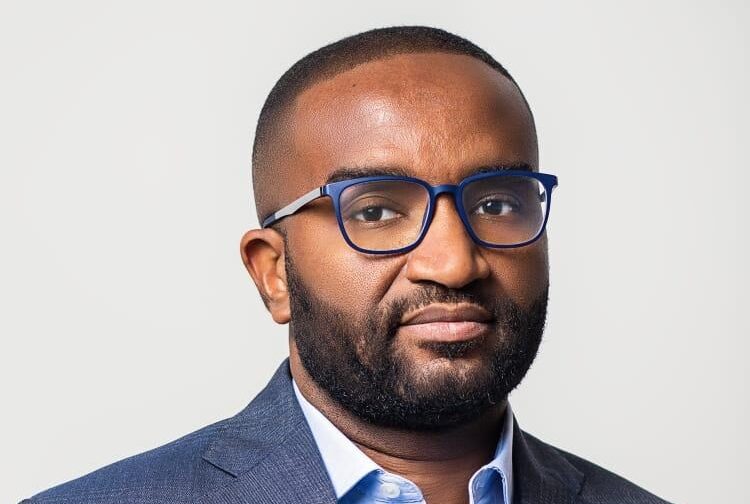
Behind every conversation about demographic growth, workforce expansion, and human capital lies a more urgent question: are African children being given a fair chance to reach their fifth birthday? In this timely reflection, Dr. William Menson, Director for Health Financing for Africa, argues that child survival is not simply a health issue, but a defining political, economic, and moral test for the continent’s future.
By 2050, more than one in four people on earth will be African. That future is often described as a demographic dividend, but dividends are not automatic. They are earned through the choices governments make long before children enter the workforce. Africa’s future workforce, innovators, farmers, teachers, nurses, entrepreneurs, and leaders are being born today.
That future starts before age five.
Africa has made real progress in reducing child deaths, and that progress should be recognized. Globally, the under-five mortality rate has fallen by 60 percent since 1990. Yet the world still lost an estimated 4.9 million children under five in 2024, including 2.3 million newborns. Nearly half of all under-five deaths now occur in the first month of life. Sub-Saharan Africa remains the region where children face the highest risk of dying before their fifth birthday.
Behind every under-five mortality statistic is a child whose future ended before it began, a family changed permanently, and, too often, a health worker who knew what was needed but did not have the oxygen, antibiotics, vaccines, transport, staff, or budget to act in time.
This is a health tragedy, but it is also something more uncomfortable: a political and financing failure.
Most of these deaths are preventable: complications around birth, prematurity, pneumonia, malaria, diarrhoea, malnutrition, vaccine-preventable diseases, and lack of timely primary care. The problem is not that Africa lacks knowledge, nor is it that solutions are out of reach. The problem is that lifesaving services are too often underfunded, understaffed, unevenly delivered, and invisible in public budgets.
A proverb often used across Africa says: “It takes a village to raise a child.” Today, it also takes a budget, a clinic, a trained health worker, a stocked pharmacy, and a functioning referral system.
That is the test leaders should set for themselves this Children’s Day: not whether children are mentioned in speeches, but whether the services that keep them alive are protected in budgets and delivered where deaths are most concentrated.
Five things would make that commitment real:
1. Protect the money that protects children
When budgets tighten, primary care, outreach, commodities, and frontline delivery can be quietly squeezed. Children are often the first to pay the price.
This is where political commitment becomes real. Not in national plans, not in communiqués, but in the budget lines that survive when fiscal space tightens.
Governments should protect and track budget lines for primary health care, community health workers, immunization, maternal and newborn care, nutrition, malaria, pneumonia, diarrhoea treatment, oxygen, and essential medicines.
Primary health care is one of the highest-return investments available to any government. WHO estimates that scaling up primary health care interventions across low- and middle-income countries could save 60 million lives and increase average life expectancy by 3.7 years by 2030.
2. Find the children the system still misses
National averages hide the children most likely to die: newborns, zero-dose children, children in remote communities, informal settlements, conflict-affected areas, pastoralist populations, and underserved districts.
Every government should identify where these children are, what services they are missing, and what it will cost to reach them.
A national average can improve while the poorest children remain invisible. That is not success. It is statistical comfort.
3. Treat nutrition as the foundation of productivity
Nutrition is not welfare. It is economic infrastructure.
A child who is malnourished is more likely to fall sick, struggle in school, earn less as an adult, and remain trapped in poverty. The World Bank estimates that undernutrition and micronutrient deficiencies cost the global economy at least US$3.5 trillion a year.
Governments should protect maternal nutrition, breastfeeding support, wasting prevention and treatment, fortified foods, micronutrients, and community nutrition platforms. A country cannot build human capital while allowing malnutrition to weaken children before they reach school.
If leaders are serious about productivity, industrialization, and growth, nutrition cannot sit at the margins of social policy.
4. Do not let old killers come back
Progress against child mortality is fragile. Malaria, pneumonia, diarrhoea, measles, malnutrition, and newborn complications can surge when immunization weakens; health workers go unpaid, supply chains fail, or donor support declines.
Governments and partners must protect the basics: vaccines, malaria prevention, antibiotics, oral rehydration salts, zinc, oxygen, skilled birth care, and community health systems. These are not optional programmes. They are the foundation of child survival.
5. Make child survival visible in public budgets
What governments publish, parliaments can question. What parliaments question, citizens can defend. What citizens can see becomes harder to cut.
Every African government should publish an annual child survival budget scorecard showing what was allocated, what was released, what was spent, and whether deaths are falling.
The scorecard should answer four basic questions:
- Are we allocating enough?
- Are funds being released on time?
- Are services reaching the children most at risk?
- Are preventable deaths falling?
Africa’s child survival challenge is not only about more money. It is about better-protected money, better-spent money, and publicly accountable money.
The Choice Leaders Must Make
Africa’s future will not be won in youth speeches alone. It begins in delivery rooms, vaccine lines, nutrition centers, community clinics, district budgets, and parliaments.
The demographic dividend starts before five.
This Children’s Day, leaders should make one clear pledge before the next budget: protect the children. The plan must show what will be funded, who is still being missed, and how citizens will see the progress.
Africa’s future is not waiting in 2050. It is being decided now, child by child, budget by budget, village by village.
Dr. William Nii Ayitey Menson is Director of Health Financing for Africa at The ONE Campaign (ONE). ONE drives the investments needed to create economic opportunities and healthier lives in Africa.