What the African Union Extraordinary Summit on Health means for the continent’s health future, and why ONE believes the real work starts now.
For two days in July, Accra hosted something Africa’s health agenda has needed for a long time: a political moment built around delivery rather than declaration.
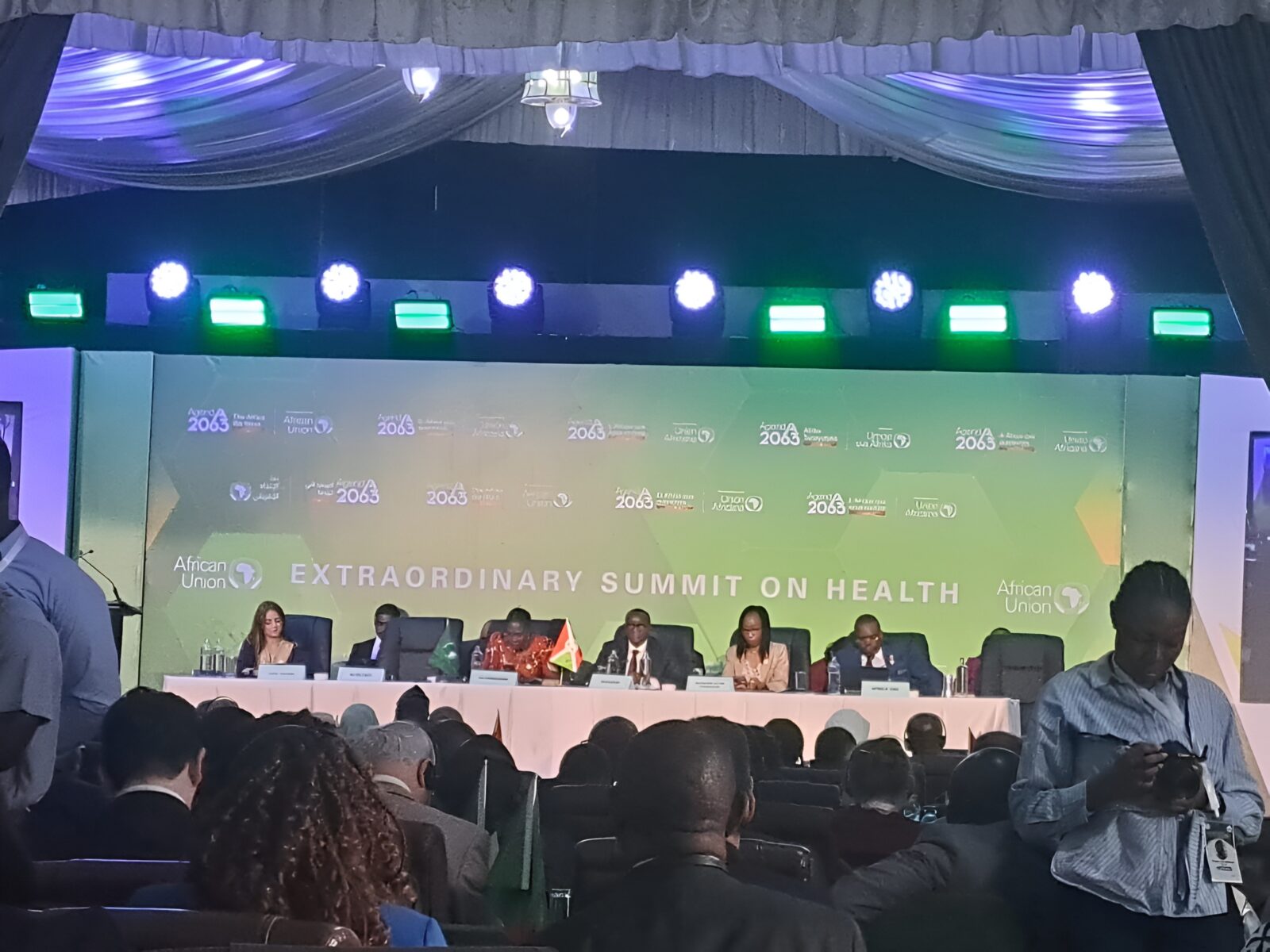
The African Union Extraordinary Summit on Health, convened on 21 and 22 July under the leadership of Ghana’s President John Dramani Mahama and chaired by AU Chairperson President Evariste Ndayishimiye of Burundi, brought Heads of State together with ministers of health, finance, foreign affairs and development planning to consider one document: the fully costed AU Roadmap to 2030 and Beyond. The Roadmap is the continent’s framework for ending AIDS as a public health threat, tackling TB, malaria, maternal mortality, neglected tropical diseases and the rising burden of non-communicable disease, and for building the resilient health systems that make all of it possible.
Heads of State endorsed it. The Accra Declaration now carries their names.
Still, the signatures may prove less important than the framing that produced them.
Health financing is now a sovereignty question
The central message, repeated across the ministerial and presidential sessions, was unambiguous: Africa cannot protect its health gains through uncertain external financing alone.
The numbers behind that message are stark. Global official development assistance fell 23% in 2025, the largest annual decline ever recorded, with bilateral aid to Africa down almost 24%. Health is absorbing the deepest cuts of any sector: the OECD projects health ODA will fall by as much as 46% between 2024 and 2026, reverting to levels last seen in 2008. The institutions that anchored two decades of progress against HIV, TB and malaria are under real pressure, and African governments already know the model is changing. The live questions are who will set priorities, who will pay, and who will be accountable as it does.
Accra answered with a shift in framing that ONE has long argued for. Domestic health financing belongs in the sovereignty, productivity and security conversation, well beyond its traditional home as a social-sector budget line. President Mahama made the point in historical terms, connecting health sovereignty to the continent’s liberation struggles. The unfinished work of self-determination, he argued, now includes the ability to finance, govern, manufacture, regulate and deliver health systems for African citizens.
Ghana did not make that argument empty-handed. The host country pointed to its Free Primary Health Care Programme, the Ghana Medical Trust Fund and growing local pharmaceutical manufacturing as a national version of the continental case. That emphasis on primary health care ran through the whole summit: leaders placed PHC at the centre of universal health coverage, epidemic preparedness and equitable delivery, because sovereignty means little if it never reaches the clinic where someone pays out of pocket or goes without.
Ministers spent much of the summit on the practical machinery of the shift: health taxes and levies, insurance reform, equity funds, public financial management, debt swaps, and progress against the Abuja commitment to allocate 15 percent of national budgets to health. Running through all of it was the health workforce, because financing ultimately exists to put trained people in front of patients. Rwanda’s community-based health insurance, Tanzania’s UHC reforms and Botswana’s malaria and NTD record were held up as proof of what political commitment and domestic financing can deliver.
Medicines manufacturing is industrial policy
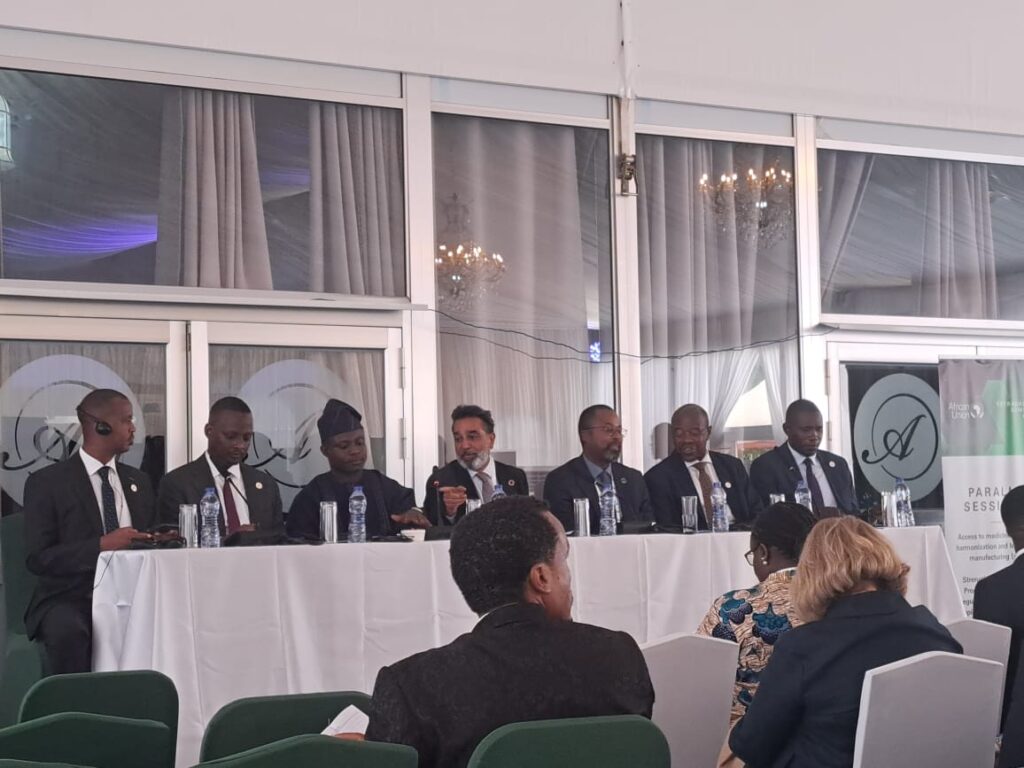
The second shift was just as significant. The summit placed pharmaceutical manufacturing where it belongs: at the centre of Africa’s industrial and trade agenda, well beyond the narrow procurement conversation it usually gets confined to.
Local production of medicines, vaccines and diagnostics was linked explicitly to jobs, research, clinical trials, skills, regulatory systems and regional value chains, with the African Medicines Agency, the Pharmaceutical Manufacturing Plan for Africa, pooled procurement and AfCFTA-enabled market scale treated as one connected implementation agenda. As UNAIDS Executive Director Winnie Byanyima put it, Africa must become a creator and producer in the global health system, rather than remaining a consumer of what others make.
This is the connective tissue between health and economic transformation, and it is where the continent’s health agenda meets the questions ONE works on every day: the cost of capital, the depth of African markets, and the financing conditions under which African industry can compete.
Accountability is the test
The strongest recurring warning in Accra was directed at the summit itself: the Accra Declaration must avoid the fate of so many elegant statements of intent before it.
AUC Commissioner Amma Twum-Amoah opened the ministerial session with the questions that will decide whether it does. What will be done differently? Who is responsible? How will implementation be financed, progress measured, and leaders held to account? The Roadmap’s answer is annual progress reporting, scorecards, peer review and a clear division of responsibility between Member States and AU institutions.
That is the right answer. It is also the hard one. Commitments are announced at summits. They are kept, or broken, in budget circulars, procurement decisions, workforce plans and regulatory timetables that rarely make headlines.
Where ONE stands
ONE welcomes the Accra outcome because it aligns with what our own analysis has shown for years: Africa’s health future depends on domestic financing, smarter external partnership, credible data and accountability that citizens can see.
This agenda redefines global solidarity rather than abandoning it. Gavi, the Global Fund, PEPFAR, the World Bank and the African Development Bank should be understood as transition partners, institutions that help countries protect hard-won gains while African governments build the fiscal space, institutions and markets to sustain progress on their own terms.
ONE’s role in that transition is practical. Through our partnership with the Clinton Health Access Initiative, we are already working with governments in Nigeria, Senegal and Sierra Leone to pair fiscal-space analysis with the political advocacy that turns technical reform into budgeted commitments. Through our data work, we track the full financing picture, from domestic budgets and aid flows to debt service, MDB lending and remittances, because the Accra Roadmap will only matter if citizens and institutions can follow the money. And through our campaigning, we will keep the Declaration public-facing: visible, measurable and owned by the people it is meant to serve.
The question coming out of Accra has moved past whether the Declaration is ambitious enough. What matters now is whether it becomes budgets, health workers, medicines manufactured on the continent, and care that people can feel. That is the standard African leaders set for themselves in Accra.
ONE intends to help hold it, and to help meet it.
Lesijolu Eric-Nwabuzor leads Communications and Influence for Africa at The ONE Campaign (ONE). Alongside colleagues, her work engages policymakers, investors, media and the public to reframe how Africa is perceived, understood and valued.