An Ebola outbreak has been confirmed in eastern Democratic Republic of Congo (DRC), with cases also reported in neighboring Uganda. The outbreak involves the Bundibugyo strain of Ebola virus disease, a rarer strain for which there is currently no approved vaccine or targeted treatment.
Since the outbreak began, it has continued to expand and is now the largest Ebola outbreak in DRC’s history, underscoring the urgent need for faster, better-resourced response.
As health authorities work to contain the outbreak, it is also a reminder of why strong, well-funded health systems are essential to protecting communities and preventing future health emergencies. The current Ebola outbreak is also a reminder that pandemic threats remain ever-present. Protecting everyone’s health security depends on the ability to detect outbreaks early and control them rapidly, wherever they emerge.
Keep reading to learn more about what Ebola is, how Ebola spreads, the current outbreak in DRC and Uganda, and why health system preparedness matters.
What is Ebola? 5 Key facts you should know
As health officials work to respond to the current Ebola outbreak in DRC and Uganda, it’s helpful to understand what Ebola is, how it spreads, and what makes the Bundibugyo strain involved in this outbreak different from some other Ebola strains.
- What is Ebola? Ebola virus disease is a severe illness that spreads through direct contact with the bodily fluids of an infected person or contaminated materials. Understanding how Ebola spreads is critical to preventing outbreaks and protecting communities.
- What are the symptoms of Ebola? Symptoms can include fever, fatigue, muscle pain, headache, vomiting, diarrhea, and in some cases internal and external bleeding.
- How deadly is Ebola? The average Ebola case fatality rate is around 50%, though past outbreaks have ranged from 25% to 90% depending on the strain and access to care.
- When was Ebola first discovered? Scientists first identified Ebola in 1976 following simultaneous outbreaks in what is now South Sudan and the Democratic Republic of Congo.
- Can Ebola be prevented or treated? While vaccines and treatments exist for some Ebola strains, the Bundibugyo strain involved in the current outbreak does not currently have an approved vaccine or targeted treatment. However, clinical trials for candidate vaccines and treatments have been launched for the Bundibugyo strain, offering hope that future outbreaks can be managed with more effective tools.
- What is the Bundibugyo strain of Ebola? The Bundibugyo strain is one of several known strains of the Ebola virus and has caused a small number of outbreaks since it was first identified in Uganda in 2007.
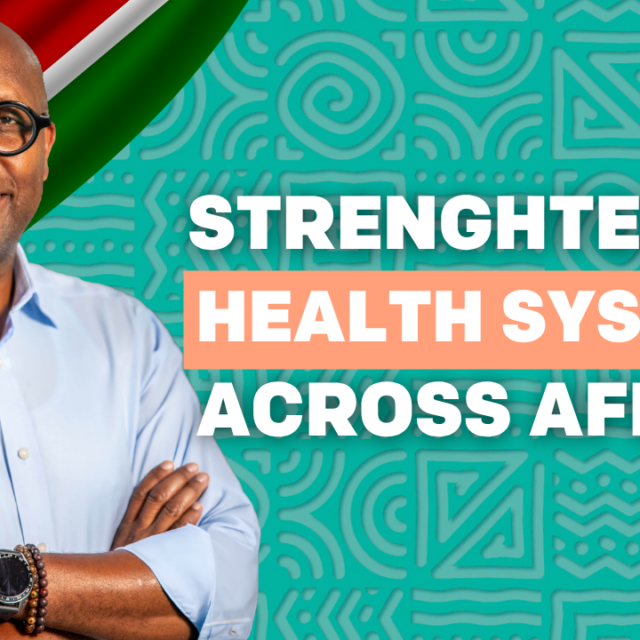
Learn more about the current Ebola outbreak and why investments in health systems, surveillance, and preparedness are critical from ONE’s Director of Health Financing for Africa, Dr. William Menson.
How DRC, Uganda, and Africa CDC are responding to the Ebola outbreak
Across affected communities, local clinicians, community health workers, laboratory teams, and border health officials are leading efforts to detect cases, trace contacts, limit transmission, and protect communities.
These frontline responders are the backbone of outbreak preparedness and response. Their ability to identify cases early, monitor potential exposure, and coordinate across borders is critical to preventing wider spread.
At the same time, Africa CDC and national health authorities are coordinating response efforts to contain the current Ebola outbreak in DRC and Uganda, demonstrating the growing capacity of African institutions to lead during public health emergencies.
This leadership matters. Over the past decade, investments in disease surveillance, laboratory networks, emergency operations centers, and health workforce training have strengthened the continent’s ability to detect and respond to outbreaks more quickly.
There have also been encouraging signs. Uganda successfully contained its outbreak, showing what’s possible when countries have the systems, resources, and leadership needed to respond quickly.
The response to this Ebola outbreak in DRC and Uganda also demonstrates the importance of African leadership combined with strong international partnership. With no approved vaccine currently available for the Bundibugyo strain, Africa CDC, the World Health Organization, Gavi, and CEPI are working together to support outbreak containment efforts and accelerate vaccine development and access. The WHO is also backing efforts to test whether the existing Ervebo vaccine, originally developed for the Zaire strain, offers any protection against the Bundibugyo strain driving this outbreak. But protecting communities from future outbreaks cannot depend on emergency funding alone.
Why preparedness and health system investment matter for Ebola
The Ebola outbreak in DRC and the prevalence of the Bundibugyo strain raises an important question: how can countries stop outbreaks before they become larger health emergencies?
The reality is that outbreaks are not one-off events. As climate change, population growth, urbanization, and increased human-animal interaction reshape global health risks, the likelihood of future outbreaks remains high. Yet global financing too often follows a familiar pattern: attention and resources surge during a crisis, then disappear once headlines fade.
The current Ebola outbreak demonstrates why this approach falls short. Health systems need sustained investment before emergencies occur—not after they escalate. To stop outbreaks before they become larger health emergencies, countries need long-term investments in local clinics, laboratories, surveillance networks, and trained health workers. These systems are the foundation of effective outbreak detection and response.
These capabilities cannot be built overnight. Effective surveillance systems, reliable supply chains, laboratory capacity, and community trust require sustained financing, long-term planning, and political commitment. Global health security depends on sustained investment in health workers and systems before a crisis occurs, because preventing outbreaks is far more effective—and far less costly—than responding once an epidemic is already underway.
That means ensuring that African institutions have the resources, authority, and flexibility to respond at the speed outbreaks require. It means investing in health systems not only as a safeguard against disease, but as a foundation for economic growth, stability, and development.
When countries are equipped to detect and contain outbreaks early, communities are protected, health services continue functioning, and economies are better able to withstand shocks. Supporting local health workers, strengthening surveillance systems, and financing African-led preparedness efforts are essential investments in preventing future Ebola outbreaks and building a safer, healthier future for everyone.