The Issues
Effective Implementation of the America First Global Health Strategy
On September 18, 2025, the Trump Administration released the America First Global Health Strategy, outlining a new vision for the future of US global health assistance. The strategy centers on keeping America safer, stronger, and more prosperous, while strengthening global health security and country ownership over health financing.
The strategy emphasizes bilateral health engagement that increases disease surveillance and emergency response capacity, streamlines global health funding mechanisms, and increases innovation and measurable return on investment.
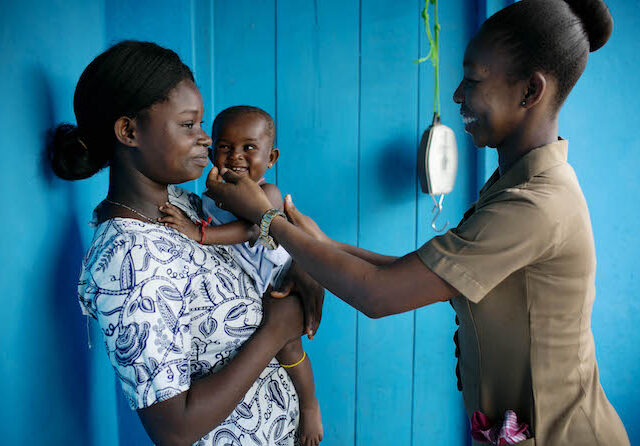
In the months following its release, the Administration began implementing the strategy through the establishment of Memorandum of Understanding (MOUs) with partner countries around the world, the majority of them in Africa. The MOUs outline potential co-financing agreements, and cooperation on infectious disease interventions and in some cases, maternal and child health programs.
Several MOUs also include provisions related to data and pathogen sharing, in addition to broader economic collaboration. For a table with the breakdown by country and co-financing requirements, click here. For a chart breakdown, click here.
Recommendations
To support effective implementation of the America First Global Health Strategy, ONE developed a set of recommendations for the Administration. These recommendations recognize the strategy’s key priorities while emphasizing the importance of holistic stakeholder engagement, country capacity, transparency, and multilateral collaboration.
ONE also continues to engage the Administration, Congress, and African partners involved in the MOUs to help ensure effective implementation planning and partnerships as the strategy moves forward.
For questions about the America First Global Health Strategy and MOUs, please contact Frieda Arenos, Director, US Government Relations.
U.S.-Africa Bilateral MOUs Breakdown
The following is a breakdown of the African MOUs by country and co-financing requirements as of July 7, 2026. Note that this page will be updated as further MOUs are signed. To see the chart version, click here.
| Country | U.S. Funding Commitment | Country Co-finance Commitment |
|---|---|---|
| Angola | $71 million | $50 million |
| Botswana | $106 million | $381 million |
| Burkina Faso | $147 million | $107 million |
| Burundi | $129 million | $26 million |
| Cameroon | $400 million | $450 million |
| Côte d’Ivoire | $487 million | $450 million |
| DRC | $900 million | $300 million |
| Eswatini | $205 million | $37 million |
| Ethiopia | $1 billion | $450 million |
| Kenya | $1.6 billion | $850 million |
| Lesotho | $232 million | $132 million |
| Liberia | $124 million | $50.7 million |
| Madagascar | $134 million | $41 million |
| Malawi | $792 million | $143 million |
| Mozambique | $1.8 billion | $70.6 million |
| Niger | $107.4 million | $71.9 million |
| Nigeria | $2.1 billion | $3 billion |
| Rwanda | $157.8 million | $70.6 million |
| Senegal | $63.1 million | $27.3 million |
| Sierra Leone | $129 million | $44 million |
| South Sudan | $146 million | $20 million |
| Tanzania | $1.3 billion | $1.8 billion |
| Uganda | $1.7 billion | $577 million |