A Stronger Hand: African Leverage, American Opportunity, and the $48 Billion at Stake
Executive Summary
African governments are asking more of their trading partners, and they have the leverage to insist.
When the Democratic Republic of Congo suspended cobalt exports in February 2025, world prices more than doubled within the year. Zimbabwe has banned exports of unprocessed lithium. Ghana will stop exporting raw manganese, bauxite, and iron ore by 2030, and process at least half its cocoa at home. These are not requests. They are decisions by governments that know what their resources are worth.
Two models are now on the table. China offers African countries broad access to its market but keeps the profitable processing at home. Africa buys roughly a quarter of its imports from China and sends back less than a fifth of its exports, most of it unprocessed. The US can offer something different: market access paired with value added in Africa. That is what African governments are asking for. China has shown little interest in providing it.
The US is starting from behind. In 2000, it traded with Africa at three times China’s volume. Today China trades at four times the US volume. That is a complete reversal in 25 years.
New analysis in this report measures that gap. After accounting for the size of each economy, its population, and its distance from trading partners, the US exports 52% less to African countries than comparable markets elsewhere and imports 82% less from them. Chinese exports to those same countries run 15% higher than expected. Africa faces an American trade penalty and a Chinese trade premium.
There are signs the market is moving. In 2025, the US sold more goods to Africa than ever before, $40 billion, up 25% on the year. Two-way trade reached $83 billion, the highest in 25 years. But China grew faster still, to a record $348 billion. Running harder is not the same as catching up.
The prize is large and getting larger. Africa is the fastest-growing region in the world, and by 2050 one in four people on the planet will be African. The continent holds the critical minerals US defense and energy supply chains depend on, including cobalt, lithium, manganese, and rare earths. Its expanding middle class is one of the fastest-growing consumer markets for American goods.
This report puts a number on the opportunity: $48 billion in additional two-way trade by 2035 if the US closes the gap in the markets where it currently under-trades.
The tools already exist. The African Growth and Opportunity Act (AGOA), a trade preference measure, gives African producers preferential access to the US market. The Development Finance Corporation finances the ports, rail, and power that trade depends on. The Millennium Challenge Corporation helps governments build the customs and regulatory environment that makes it all work. Each solves a different problem. They are strongest used together.
The administration’s “Trade over Aid” framing offers a genuine opening, but the sequencing matters. Trade tools cannot substitute for health financing. Economies are not built by unhealthy populations, and the workforce that fills the factories and farms in this report has to survive childhood and stay well enough to work. The transition to self-reliance runs through health systems, not around them.
Four steps would turn the framing into results. Use AGOA’s extension through 2028 to modernize it. Keep at least 25% of the DFC’s portfolio in Africa. Put more commercial officers on the ground. And rebuild the regional trade hubs that closed with USAID.
Africa is not waiting. The question is whether America shows up.
China is ahead, but the race is not settled
At the start of this century, the US traded with Africa at more than three times China’s volume. That has reversed completely.
US-Africa trade doubled between 2000 and 2025, from $41 billion to $83 billion. Over the same 25 years, China’s grew 29-fold, from $12 billion to $348 billion.
Africa’s turn eastward reflects Washington’s absence more than any rejection of American partnership.
The gap is structural. China holds bilateral investment treaties (BITs) with 34 African countries. The US has only nine. These agreements protect investors against expropriation and discriminatory treatment and give them legal recourse when deals go wrong. Without them, American companies take risks their Chinese competitors do not, and the trade does not follow.
US officials have acknowledged as much, with then Deputy Commerce Secretary Don Graves conceding that Washington “took our eye off the ball” and “US investors and companies are having to play catch up.”
African leaders have been direct about the consequence. As Gabon’s President Brice Oligui Nguema told President Trump in 2025: “You are welcome to come and invest; otherwise, other countries might come instead of you.”
That is not a preference for Beijing. It is a description of who shows up.
Why the US fell behind
Part of the answer is oil.
Since the passage of AGOA in 2000, the US-Africa trade relationship has been narrowly constructed. At first, it rested on crude oil from a handful of producers, chiefly Nigeria and Angola. When American shale production surged after 2008, that demand collapsed, and so did the headline trade figures.
That explains much of the initial bump that was not sustained. It is also the core of the problem. The relationship was narrow enough that one commodity could carry it, and extractive enough that when the oil demand went, there was almost nothing underneath. Two decades of trade did not build the manufacturing, the supply chains, or the investment ties that would have survived it.
China spent those same decades building exactly that.
What China built
Through the Belt and Road Initiative, Beijing combined infrastructure finance, resource partnerships, logistics corridors, industrial parks, telecommunications investment, and export finance. BRI commitments in Africa reached $61 billion in 2025, up 283% on the previous year.
The effect shows up in the data. ONE’s modelling finds that African countries that signed BRI agreements import about 26% less in manufactured goods from the US than would otherwise be expected. Where China built the infrastructure, American market share receded.
China also showed up in person. Chinese foreign ministers have made Africa their first overseas destination every year for 36 years. Beijing has hosted African leaders at two full FOCAC summits in the past decade, in 2018 and 2024. Washington has held one Africa Leaders’ Summit in that time, in 2022.
Economic statecraft pays.
Spotlight: Simandou
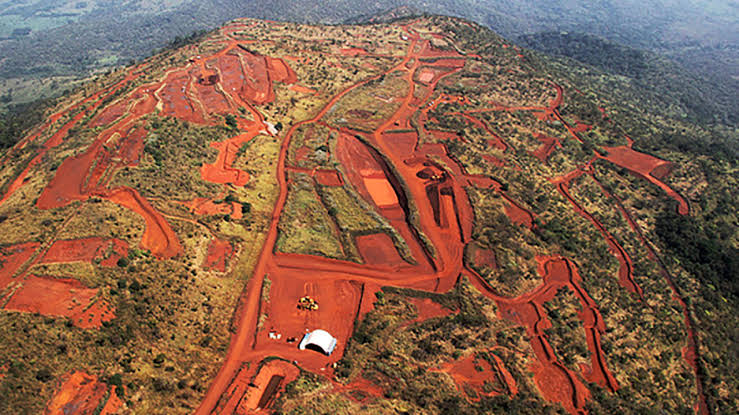
Guinea illustrates this clearly. Simandou is one of the world’s largest remaining high-grade iron ore deposits. Chinese firms hold major stakes across the project, and its 600km export railway was built under the Belt and Road Initiative. The mine began shipping to China in January 2026, with no meaningful American participation. Guinea has been suspended from AGOA since its 2021 coup. China imposes no comparable governance conditions, and now has a large stake in the infrastructure.
Public opinion has followed the investment. Afrobarometer’s 2026 survey found 62% of Africans see China as a positive influence, against 52% for the US. Views of China have held steady over five years. Views of the US have dropped six points. The recent reductions in spending on health and humanitarian programming, visa bans and persistent high-level vacancies in US missions on the continent, very likely have contributed to negative perceptions of the United States.
AGOA’s unfinished vision for Africa’s self-reliance
The US tried to boost the economic relationship with the continent in 2000 with the passage of the African Growth and Opportunity Act, giving eligible African countries duty-free access to the US market for thousands of products.
The intent was explicit. AGOA was meant to move the US-Africa relationship away from aid and toward trade, investment, and African economic self-reliance.
Twenty-five years on, that promise is half-kept.
Trade and investment that is in the interest of these countries is also in the interest of ours.”
Senator William Roth (R-DE), floor debate on AGOA, 2000
Where AGOA worked
For the countries that could use it, AGOA was transformative. ONE’s modelling finds it raised US imports from participating countries by 87%.
The apparel sector demonstrates what that looked like. In Kenya, US apparel imports grew 14-fold, from $44 million in 2000 to $616 million in 2025, and industry employment rose from 23,000 to a peak of 80,000 in 2018. In Lesotho, the garment sector became the country’s largest private employer. Women make up 85% of that workforce.
The benefits ran both ways. American exports to AGOA countries have nearly tripled since the program began, helped by eligibility rules that require beneficiaries to lower their own trade barriers. The Corporate Council on Africa estimates more than 450,000 US jobs are linked to US-Africa trade.
AGOA also proved useful as a supply-chain tool. It helped SanMar, a supplier to Levi’s and Walmart, cut its apparel sourcing from China from 46% to 6%.
Where it did not
Outside a handful of countries and sectors, the relationship stayed shallow and extractive.
Trade volumes rose sharply after 2000, but the growth came mostly from crude oil imports from Nigeria and Angola. When American shale production expanded and that demand fell away, the headline figures fell with it.
That is the pattern this report keeps returning to. AGOA created real manufacturing in Kenya, Lesotho, and Madagascar, but did not create it at scale across the continent.
Spotlight: Ford in South Africa
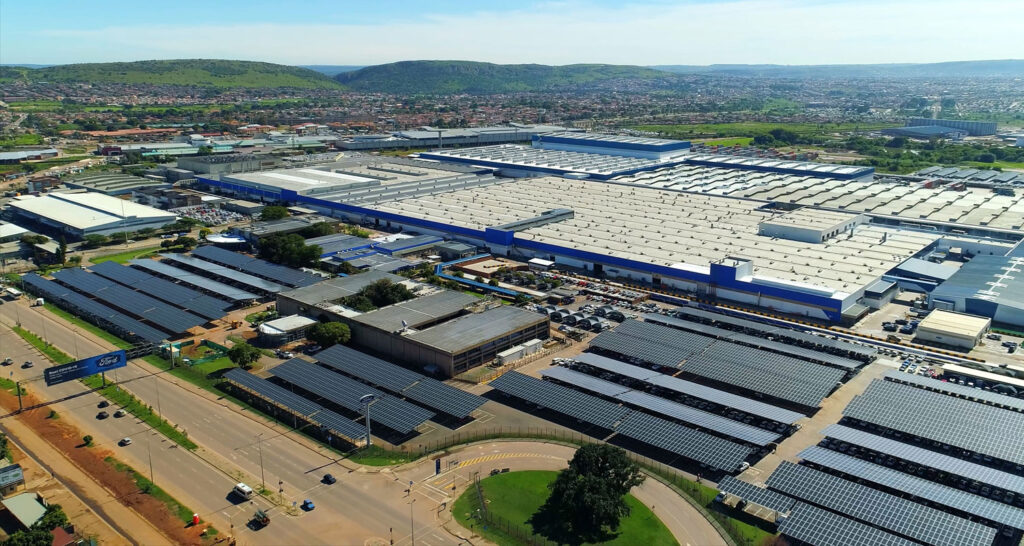
Ford runs one of its largest plants outside the United States at Silverton, in Pretoria, and committed further investment there precisely because AGOA made South Africa attractive. That investment supports American jobs in design, engineering, and supply chain management, and lower-cost vehicles for American consumers. US automakers also depend on South Africa for the platinum and palladium in catalytic converters.
Where it stands now
In 2025 and 2026, the US imposed new tariffs on African countries alongside the rest of the world, undermining AGOA’s benefits. China responded by opening its market duty-free to 53 African countries. Following legal challenges, many of the additional tariffs imposed were removed, and only 7 African countries still face additional country-wide tariffs.1
Following a series of short-term extensions, Congress recently passed a two-year extension through the end of 2028. Congress bought time, in hopes of using it to update and enhance the program. The next two years determine whether AGOA becomes the long-term, predictable market access it was meant to be, or expires having never reached most of the continent.
The opportunity: $48 billion in additional trade
ONE commissioned new analysis using a gravity model of trade, the standard tool economists use to estimate how much two countries should trade with one another. It compares actual trade against what the size of each economy, its population, and the distance between them would predict.
Run against African markets, the model finds the US trading well below expectation in many countries. Closing that gap is worth $48 billion in additional two-way trade by 2035.
The gap splits in two.
American exporters are leaving $8 billion a year on the table today. Closing the gap with under-trading countries and continuing building trade with the good performers can bring in $27 billion more by 2035.
African producers are missing $5 billion a year in sales to American buyers. The potential is $21 billion more by 2035.
Where the export opportunity sits
- Algeria presents the single largest opportunity. US exports there could grow by $2.4 billion a year over the next decade.
- Morocco is already a strong performer and the only African country with a full free trade agreement with the US. Its growth means American exports could still rise by $2.3 billion a year by 2035.
- Ethiopia and Côte d’Ivoire round out the top tier, at $1.8 billion and $1.7 billion respectively.
The potential is as great in agri-food as in manufacturing. Egypt, the top destination for US agri-food exports, illustrates this well: buying $1.3 billion of American food products a year, it has ranked among the largest global buyers of US soybeans since 2018. In manufacturing, the American aerospace sector is both a strong example of that potential and an area ripe for further growth (see vignette).
Where the import opportunity sits
- The US already buys from Egypt at roughly the expected level, but Egypt’s growth means it could supply $3.3 billion more by 2035.
- Morocco, Ethiopia, and Tanzania are all under-traded today, with potential of $3.1 billion, $2.2 billion, and $1.1 billion a year respectively.
Much of this is food Americans cannot grow. Côte d’Ivoire supplied about 30% of US cocoa bean imports in 2024. US imports of African coffee, tea, and spices, mainly from Ethiopia, Uganda, and Kenya, rose 153% over two decades.
Spotlight: Vanilla, from Madagascar farms to American ice cream
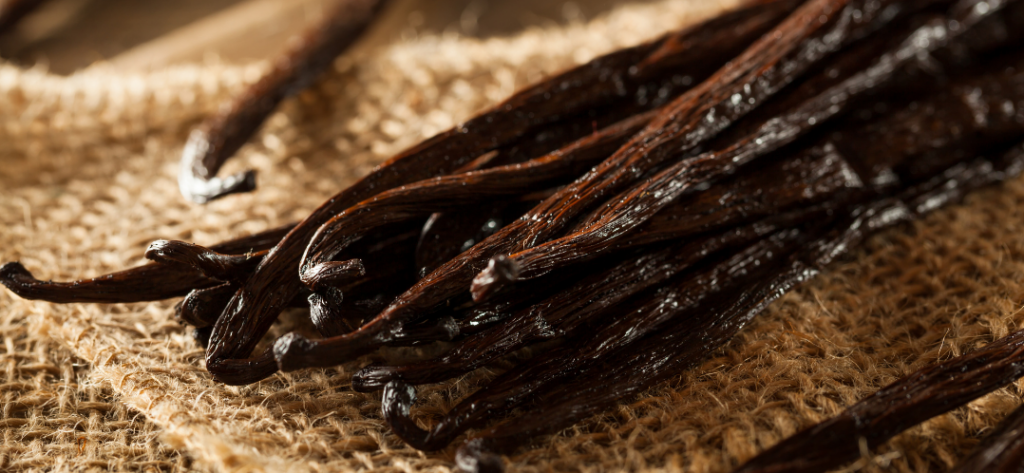
Madagascar supplies roughly 79% of all vanilla beans imported by the United States, supporting hundreds of thousands of smallholder farmers. Uganda is emerging as a second source, having doubled its vanilla exports in 2024 with the US as its largest market. American companies including IFF, Givaudan, and Symrise turn those beans into the extracts that flavor ice cream, baked goods, beverages, yogurt, and candy. Cook Flavoring has built a century-old business on Madagascar vanilla.
Critical minerals: the supply-chain case
Africa holds the inputs the digital and energy economy runs on. The continent has roughly four-fifths of the world’s platinum-group metal reserves and more than half its cobalt. The US bought $23 billion of minerals, precious stones and metals from Africa in 2024. China bought $79 billion, more than three times as much.
Ownership tells the same story. Chinese-backed firms hold equity in 15 of the 19 cobalt mines in the DRC, the world’s dominant producer. The US holds less than 1% of global reserves of cobalt, graphite, and nickel.
Closing this gap is not only a trade opportunity. It is a supply-chain security requirement.
Spotlight: Aerospace
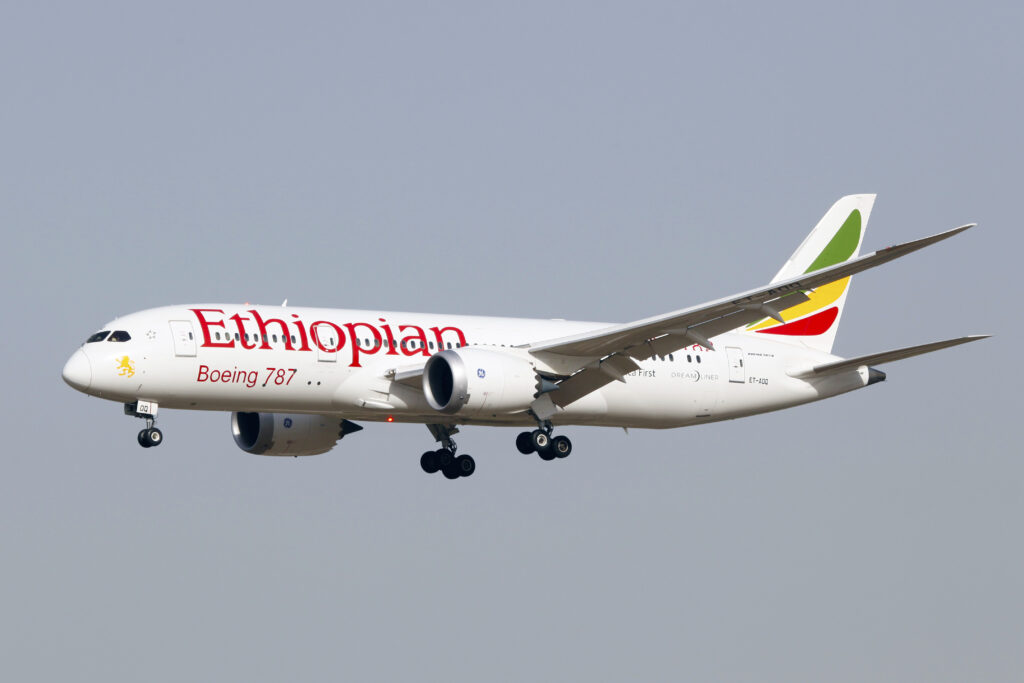
African airlines are significant buyers of high-value American manufacturing. Ethiopian Airlines leads, with EgyptAir, Kenya Airways, and Royal Air Maroc also buying at scale. Ethiopian was the first African carrier to take the Boeing 787 Dreamliner and the first to order the 777X. Africa’s aviation market is projected to doubled by 2044.
What Africa wants, and what only the US can offer
China’s model: extract and send the profit elsewhere
China’s trade with Africa is vast. It is also one-sided.
In 2025, Chinese exports to Africa reached $225 billion. Imports from Africa were $123 billion, barely half as much. The result is a trade deficit that reached $102 billion in 2025. What Africa sells China is mostly raw: crude oil, copper, cobalt, iron ore, bauxite. The processing, and the profit, happens somewhere else.
China’s duty-free announcement was a significant diplomatic win. But analysts note it may reinforce that commodity pattern rather than open Chinese markets to African manufacturers. Duty-free access to sell raw materials is not the same as access to sell finished goods. When African governments have tried to change this, Chinese firms have pushed back. Faced with bans on raw commodity exports, some have threatened to cut production until governments retreated from their processing plans.
ONE’s modelling shows the pattern in the data. Belt and Road agreements do not systematically raise Chinese exports to partner countries. They do raise China’s mineral imports from those countries by roughly 28%.
The infrastructure was built to move raw materials out.
Africa has a stronger hand, and is using it
African governments are no longer only asking for value addition. They are legislating it.
At least 13 African countries have enacted export restrictions since 2023 to capture more of the value chain. Malawi, rich in rare earths, banned all raw mineral exports in 2025. Because these countries sit at the center of global supply chains, the decisions land in Washington and Beijing alike.
- The DRC suspended cobalt exports in February 2025. Prices more than doubled over the year.
- Zimbabwe banned exports of unprocessed lithium and will permit only higher-value products from January 2027.
- Ghana will stop exporting raw manganese, bauxite, and iron ore by 2030, and process at least half its cocoa at home.
These governments are choosing partners, not waiting to be chosen. What they are choosing for is value added at home.
The opening
This is where the US has an advantage it has not used. China arrived first and built deep infrastructure. But it treats Africa primarily as a supplier of inputs for value chains it has built in East Asia. That is a structural feature of the model, not an oversight. It leaves an opening for a partner willing to help African countries refine, process, and manufacture at home.
That partner would be offering exactly what African governments are now legislating to get. And it would be building supply chains that serve American security and commercial interests at the same time.
The US has the tools. The question is whether it can use them together strategically.
Three tools, one strategy
The US already has what it needs to compete. It has not been using the tools together.
- AGOA opens the American market to African producers.
- The Development Finance Corporation finances the ports, rail, and power that trade depends on.
- The Millennium Challenge Corporation helps governments build the customs rules and regulatory environment that make it all work.
Each solves a different problem. Used together, they are considerably more than the sum of their parts.
AGOA: use the two years
Congress extended AGOA through the end of 2028. That bought time. It did not modernize the program.
Turning AGOA into a long-term, predictable market access program is what gives American companies the certainty to build supply chains, deploy capital, and form lasting partnerships with African producers. Modernization should include:
- Add processed critical minerals to AGOA’s product list, paired with tax credits for US companies investing in processing and refining facilities in Africa. This counters China’s supply-chain dominance and creates higher-value jobs across the continent.
- Let African-sourced components count toward duty-free thresholds. This supports AfCFTA integration and reduces African producers’ dependence on Chinese inputs.
- Reform graduation rules so countries must sustain high-income status for several years before losing eligibility, with extensions for those negotiating a free trade agreement with the US. This protects jobs and supply chains built under the program.
- Move eligibility reviews to every three years instead of annually. This frees US government staff to focus on stronger enforcement of AGOA’s standards on governance, human rights, worker protections, and market openness, rather than repeating an annual paperwork exercise. AGOA already allows out-of-cycle reviews when a government’s conduct warrants one.
- Fund trade capacity-building for countries developing AGOA utilization strategies, so more of the continent can actually use the preferences.
- Cut obsolete paperwork such as textile visa filings that Customs and Border Protection no longer needs.
DFC: hold the Africa share
The Development Finance Corporation is the US government’s main instrument for de-risking private investment in emerging markets, through debt, equity, insurance, and technical assistance. Congress raised its maximum contingent liability from $60 billion to $205 billion in the 2025 reauthorization.
That money should keep working in Africa. Lawmakers should ensure the DFC maintains its development mandate, including dedicating at least 25% of its portfolio to African countries.
For Africa, DFC financing fills the infrastructure gap that suppresses export capacity. For the US, it addresses supply-chain vulnerabilities in critical minerals, agrifood, and manufacturing.
The Lobito Corridor shows the model. A $553 million DFC loan supports an 800-mile transport network linking Angola’s port of Lobito to the copper and cobalt Copperbelt in the DRC and Zambia. It now moves goods two-thirds faster than the alternatives. A $150 million loan to a graphite mining project points the same way, and cold storage investments in Morocco and Senegal are cutting post-harvest losses in supply chains American food importers rely on.
MCC: fix what stops trade at the border
The MCC works differently. It provides time-limited grants rather than loans, to lower-income countries that meet transparent governance and economic-freedom criteria, through compacts designed jointly with recipient governments.
Its distinctive strength is regional compacts: multi-country programs for cross-border infrastructure and regulatory coordination. That makes the MCC well suited to the problems that quietly kill African trade, such as inconsistent customs rules, incompatible regulations, and transport corridors that stop at national borders.
The Côte d’Ivoire Regional Energy Compact builds on an earlier transport and workforce compact, expanding reliable electricity access to support cross-border trade and create openings for American companies.
Benin shows what this can achieve. An MCC port modernization compact helped triple the Port of Cotonou’s capacity and increase transshipment volumes 25-fold, turning the region’s worst-performing port into a competitive hub that American exporters and importers now use.
All three together
AGOA builds the trade relationships. The DFC finances the roads, rail, and ports. The MCC helps African governments harmonize the rules that make them viable.
Used together to build partnerships that promote local value addition, they offer a model that can genuinely compete with China, while advancing the administration’s own goal of moving countries off dependence on aid.
Recommendations
The administration’s “Trade over Aid” framing offers a real opening. ONE shares the destination: African countries financing their own development, with trade and investment replacing dependence on assistance.
But sequencing matters. Trade tools cannot substitute for health financing and treating them as interchangeable would undermine both. Economies are not built by unhealthy populations. The workforce that fills the factories, farms, and firms described in this report has to survive childhood and stay well enough to work.
The transition to self-reliance runs through health systems, not around them. Getting there takes trade and aid together, with health investment sustained through the transition rather than traded away at the start of it.
Five steps would turn the framing into results.
- Use AGOA’s extension to modernize it. Congress extended AGOA through 2028. That was the right call, and it bought two years. Those two years should be used to add processed critical minerals to the product list, let African-sourced components count toward duty-free thresholds, reform graduation rules, and move eligibility reviews to a three-year cycle so enforcement can be strengthened.
- Move “Trade over Aid” from declaration to action. Post more commercial officers at US embassies in Africa. Increase official trade delegations. Remove the remaining tariff barriers on African imports. And properly resource the US trade and development agencies that make commercial partnerships possible.
- Keep the DFC working in Africa. The DFC should continue to dedicate at least 25% of its portfolio to sub-Saharan Africa, consistent with its 2024 and 2025 levels. Nigeria, Côte d’Ivoire, and Senegal are among the highest-opportunity markets.
- Rebuild the regional trade and investment hubs. Previously funded by USAID, these hubs were the on-the-ground point of contact for American businesses pursuing African opportunities. Their closure is a direct, practical barrier to the trade growth the administration says it wants.
- Build the legal architecture that lets American capital compete. China holds bilateral investment treaties with 34 African countries. The US has them with nine. These agreements protect investors against expropriation and discriminatory treatment, and give them recourse when deals go wrong. Without them, American companies carry risks their competitors do not, and capital goes where it is protected. Expanding the US treaty program, starting with the largest economies and the under-traded markets identified in this report, is among the lowest-cost, highest-leverage steps available.
Conclusion: Africa as opportunity, not risk
Africa is the fastest-growing region in the world. By 2050, one in four people on the planet will be African. Sub-Saharan Africa grew an estimated 4.5% in 2025 and is projected to grow 4.3% in 2026. The African Continental Free Trade Area is knitting together a market of 1.4 billion people and $3.4 trillion in combined GDP.
African governments know what they want from that growth. They want partners who help them process, refine, and manufacture at home, not partners who take the raw material and add the value somewhere else. They have said so, and they are legislating it.
China arrived first. But China’s model is built to move raw materials out, and Beijing has shown no interest in changing it.
That leaves an opening worth $48 billion in additional two-way trade by 2035. Taking it requires the US to offer what China will not: a partnership that builds value where the resources are.
The tools exist. The markets are growing. The invitation has been issued.
Africa’s growing economic weight is a strategic market that the United States is increasingly absent from. Investing in the trade relationship advances both our economic interest and African development. The two are not in tension. The case for deeper engagement is strategic, not philanthropic.
Elizabeth Hoffman, Executive Director, North America, ONE
About this report
Published by the ONE Campaign. Unless otherwise stated, analysis and data are drawn from the UN Comtrade and BACI databases, with a background report from Ciuriak Consulting.