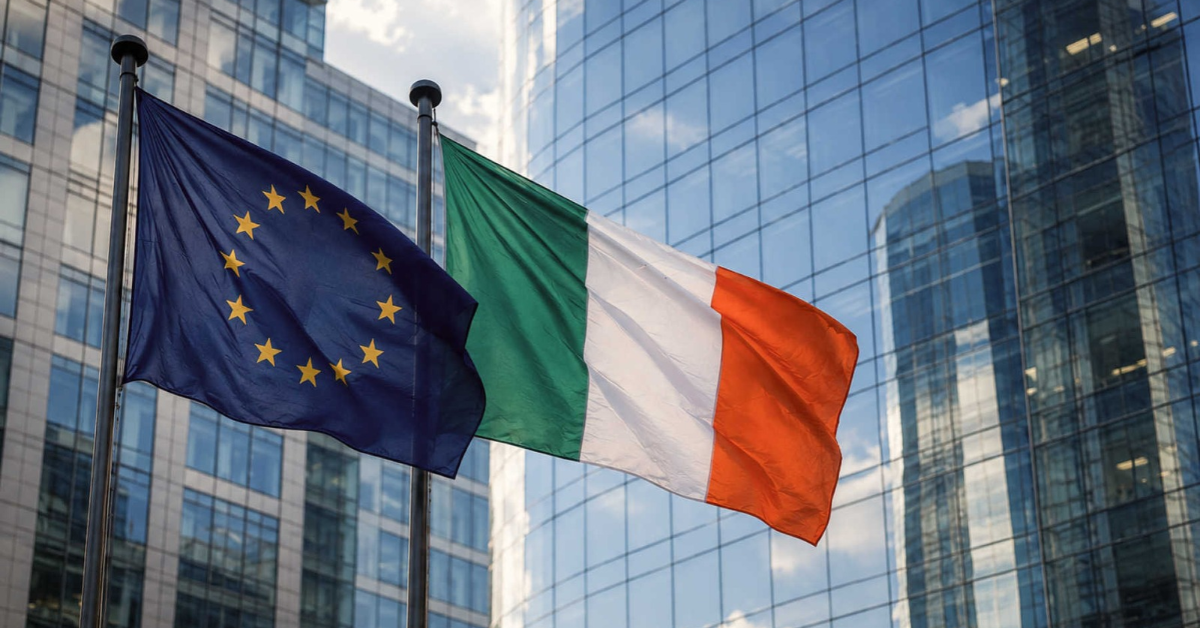
In the days leading up to some 50 European leaders meeting in Dublin earlier this month, hoax bomb threats were sent to airlines, schools, supermarkets and newsrooms across Ireland. The Garda Commissioner said they came from outside the state and were intended to destabilise. Threats like these are why defence dominates the EU budget debate. Europe is right to take its security seriously, but paying for defence by cutting development aid only adds to insecurity.
Why is aid the first thing to go whenever the EU budget gets tight? When EU leaders meet in Brussels on Thursday to negotiate the Union’s 2028 to 2034 budget, most of the attention will go to farm payments, defense and who pays for what. Much less will go to the Global Europe Instrument, the line that pays for the EU’s development aid, humanitarian assistance and partnerships with poorer countries. The Instrument deserves more, and Taoiseach Micheál Martin is better placed than most to make sure it gets it.
The European Commission has proposed €200.3 billion for Global Europe over seven years. This is not where the talks are heading. The negotiating box tabled by António Costa on Saturday takes 10 per cent off the Commission’s overall proposal, but 21 per cent off external action. The Global Europe Instrument alone would lose almost 20 per cent, roughly €39 billion.
The Presidency is charged with proposing a budget all 27 governments can work with, including the so-called frugal states that want deep cuts. That is distinct from describing what Ireland wants.
On that question, the Department of Foreign Affairs was clear when it appeared before the Oireachtas Committee on European Union Affairs in September. If cuts have to be made across the board, an official said, Global Europe should not take a disproportionate share. They added that it is an easy area to cut, but that cutting it does little for the wider budget problem because the amounts involved are small.
Global aid fell by more than 23 per cent between 2024 and 2025, according to figures given to the same committee, the biggest one-year drop on record. For the least developed countries it fell by almost 26 per cent. A study published in The Lancet Global Health this year projects 9.4 million additional deaths by 2030 if donors keep cutting. That is close to twice the population of Ireland. The United States has effectively shut down its aid agency, USAID, Britain has cut twice, and Germany and France have cut.
There is also a plain case of self-interest. By 2034 Africa will have around 1.9 billion people and the youngest workforce of any continent. Other powers have noticed. In October, China’s foreign minister, Wang Yi, offered zero-tariff access to every African country that has diplomatic relations with Beijing. Europe is still Africa’s biggest trading partner, for now. But others are catching up.
Security is the other reason to protect this budget. ONE has described a security paradox: the ten biggest defence spenders in the OECD spend $7 on defence for every $1 on development and diplomacy combined. Armies can deter an attack, but they cannot prevent the conflicts and disease outbreaks that later become Europe’s, our, problem. Ireland is a neutral country, we expect it to stand for peace, and the EU budget is its chance to argue for more of that.
Health is where the cost of cutting back is easiest to see. Global Europe is Europe’s first line of defence against disease outbreaks. The Ebola outbreak in the Democratic Republic of Congo has now passed 10,000 confirmed cases, making it the second largest ever recorded. Stopping an outbreak early is far cheaper than containing it later, and higher defence spending in Europe does nothing to stop one in central Africa.
Trócaire has worked in the Democratic Republic of Congo since the early 1990s. Its office in Bunia, in Ituri province, is at the centre of this year’s Ebola outbreak, and with ten local partners it has set up hand-washing stations and trained community leaders to give accurate health information. Cuts to aid and to local health services meant the outbreak was detected late.
Ireland has the standing to make these arguments. It has consistently increased its aid while bigger donors have cut back, and in these talks it has argued for a guaranteed floor for humanitarian funding.
Now that the Presidency text is on the table and António Costa, the President of the European Council, is leading the negotiations, Ireland is free to pursue its interest.
At the summit, the Taoiseach should back the Commission’s €200.3 billion as the minimum for Global Europe and resist any deal that loads savings onto external action. He should also push to restore the commitment, in the current budget but dropped from the new proposal, that at least 20 per cent of the instrument goes to health, education and social protection. And Ireland should look for a guaranteed minimum for sub-Saharan Africa, where much of its own aid already goes, alongside the humanitarian floor it has been seeking.
Dublin has just seen what a more dangerous world looks like. Cutting Global Europe in response would be a false economy. It would leave Europe less secure, less prosperous and less influential, and the Taoiseach should say so in Brussels.
The decisions taken in Brussels over the next few weeks will shape how Europe is seen in Africa for the next decade. Ireland has spent a long time building a reputation as a reliable partner. This is a good week to use it.
David McNair is Managing Director of ONE Data at the ONE Campaign. Seán Farrell is Chief Executive of Trócaire.