As Zimbabweans we often refer to ourselves as children of the soil. It is a reminder always that we are a people rooted in the land, communal efforts and resilience. When we reminisce about home, what comes to mind is the laughter that echoes through Harare’s streets, the playful chaos of vendors trading jokes, the warmth of strangers who stop for genuine check‑ins that go far beyond polite greetings – no wonder we are ranked highly on the happiness index. A country where business is a shared language, where creativity is a survival skill, and where joy persists even in uncertainty.
Traveling across Zimbabwe along the great dyke reveals a different rhythm. In the misty Eastern Highlands, the farming belts of Rusape, and the orchards of Mazowe, women and men rise before sunrise to tend to soil that carries both memory and hope. Conversations shift from exchange rates to rainfall patterns, from side hustles to climate change, from today’s harvest to tomorrow’s future. Zimbabwe’s story has always been written in community — hands washing each other, our mantraizandla ziyagezana.
As we grow and confront the contradictions between the utopia we once experienced and the realities widely known about our country, we find ourselves asking how a nation so rich in talent, land, minerals, and innovation can be reduced to a single global narrative of crisis? In Europe, Zimbabwe is often remembered only for hyperinflation of 2008, political turmoil, or land reform that paints us with one brush of an identity that begins and ends with hardship. What is not highlighted is our journey to rebuilding and how nuanced it is. Our GDP grew by 6.6% in 2025, with a projected 5% in 2026, driven not only by agriculture but by a rapidly expanding mining sector. Lithium is positioning Zimbabwe as a key player in the global transition to renewable energy technologies.
As Zimbabwean women based in Europe, we quickly realized how dominant the narrative is that women in the global south exist only as oppressed with little acknowledgement of the forms of emancipation, agency, and leadership embedded in our own cultural contexts. What the world rarely sees is the quiet revolution led by Zimbabwean women. In Mashonaland West (Zvimba), Masvingo (Gutu), and Manicaland (Chimanimani), women‑led pfumvudza conservation plots are redefining food security. These women apply daily knowledge of soil, seed, and climate, not theory, but lived expertise, to sustain families and markets.
Equally transformative is mukando, the informal microfinance system where our mothers pool resources, extend credit, and build enterprises long before banks ever considered them bankable. These homegrown financial institutions inspired Zimbabwe’s formal microfinance sector. Our mothers were running efficient economies long before the term “microfinance” existed. Women are also reshaping the future through community-led charities that keep girls in school and provide menstrual hygiene products. Something as simple as a sanitary pad can determine whether a girl misses school or continues her education. When we invest in women and girls, we invest in Zimbabwe’s future.
Dzimba Dzemabwe, known as Great Zimbabwe, shows that our greatness is not new. Long before modern engineering, our ancestors built it stone by stone — no mortar or cement used — creating a royal city that became the heart of a thriving kingdom. The same spirit of innovation lives on in farmers adapting to climate change, in youth cooperatives building businesses, in women creating financial systems from nothing.
Recent lifting of EU sanctions on Zimbabwe stands at a turning point not just politically, but economically. What we encourage EU decision-makers to do in terms of Zimbabwe and EU relations is to continue to advance the partnership model that recognizes us as equal actors, not junior recipients of instruction. Our economic resilience and growth are evidence of our capabilities, as we are among Africa’s top exporters of blueberries and tobacco, and the three big minerals. The EU risks missing an opportunity to trade with us if engagement continues to be shaped by conditionality rather than collaboration. A fair partnership means acknowledging that policies of local ownership requirement for multinational companies are not barriers, but safeguards to ensure shared value.
The scramble for Africa is happening again. The only question is whether Europe will repeat history or rewrite it through fairness, equity, and true partnership. Zimbabwe stands ready for the latter.
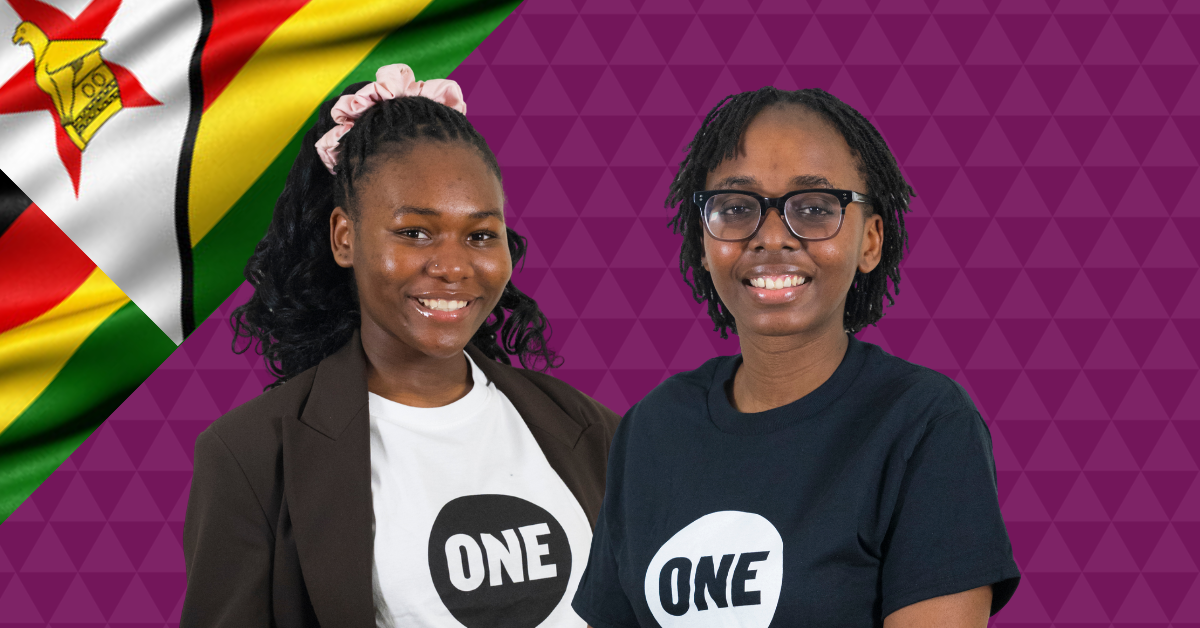
Faith M. Ngwenya is a ONE Youth Ambassador with a BSc in Biomedical Science from Anglia Ruskin, currently pursuing an MSc in Molecular Biology at Vrije Universiteit Brussel (VUB), and Women’s Health Endometriosis Advocacy Member of Youth Women’s Health Group.
Charmaine Mupara is a ONE Youth Ambassador and climate activist from Zimbabwe. She managed a rainwater harvesting and food security project with Environmental Buddies Zimbabwe, before mentoring youth-led climate initiatives in Kenya through Bow Seat. An aspiring environmental economist, she is passionate about climate equality, sustainable development, and empowering young people to drive green growth across Africa.