Adrian Lovett
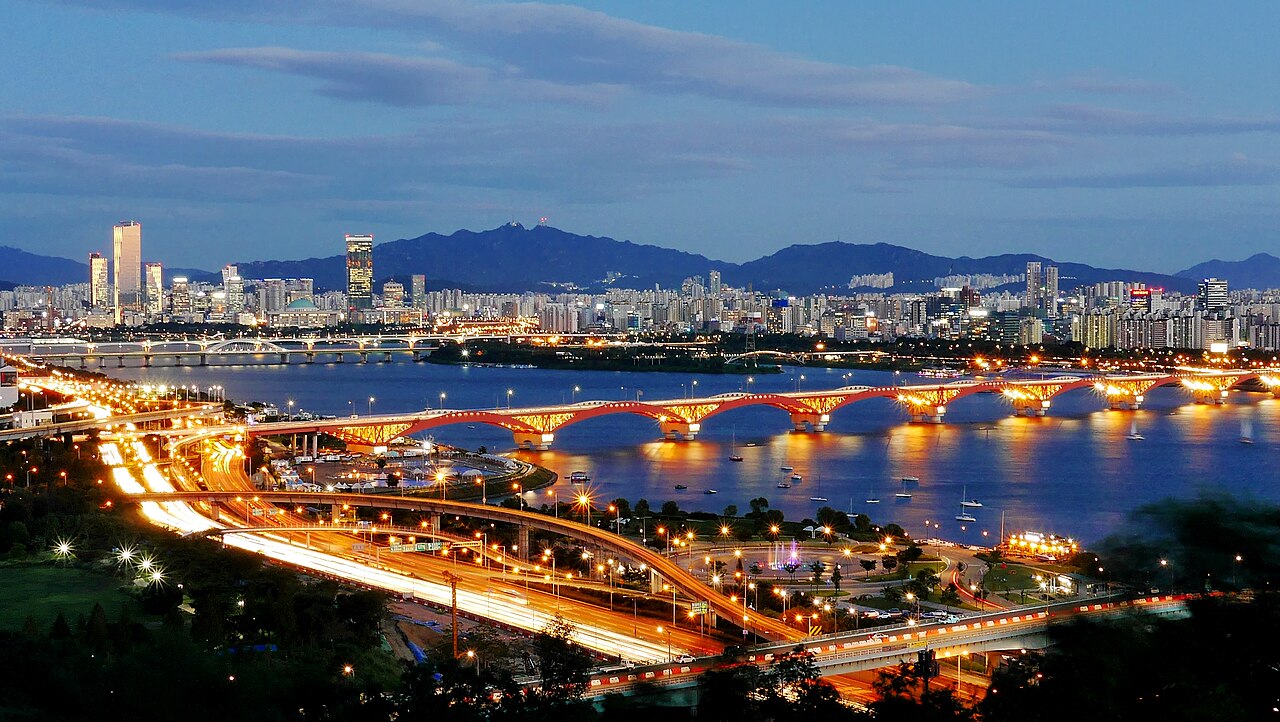
When Korea first hosted the G20 summit in 2010, Seoul was, for many visitors like me back then, a glimpse into the future. As leaders gathered to plot a way forward for a world still reeling from the worst financial crisis in a generation, Korea was already a remarkable story of progress, opportunity and transformation.
The Seoul that exists in the world’s imagination today is even more remarkable — a city whose music fills stadiums from London to Los Angeles, whose films win Oscars, whose footballers inspire fans around the world, whose cultural confidence has become a kind of soft power that no government programme could have designed. In 2010, the country was a major exporter of technology. Today, Korea’s most powerful export may well be Korea itself.
That G20 summit in 2010 was the first to be hosted outside the West. The choice of Seoul sent a signal: that the old geography of global leadership was shifting, that new voices and new models deserved a seat at the table. By 2028, when Korea will again host the G20, that shift will be even more pronounced. The Korean G20 presidency will build on successful summits in recent years hosted by Brazil and South Africa, each of which brought fresh perspectives and priorities to the world’s attention.
President Lee Jae Myung has spoken of approaching the 2028 G20 with a “profound sense of responsibility,” and that phrase resonates. The world once again faces intersecting crises: geopolitical fracture, squeezed development budgets, the mounting costs of climate change, and questions about whether the institutions we have built are adequate to the challenges ahead. At the ONE Campaign, we believe the world can rise to the moment.
ONE advocates for the investments that will create healthier lives and economic opportunities across Africa. ONE was born from extraordinary moments of global solidarity — the Jubilee debt relief movement, the Make Poverty History campaign, and the Gleneagles G8 commitments of 2005 — when it seemed possible to build a sustained, cross-partisan coalition for equitable global progress. My experience of those campaigns in their earliest days has shaped everything I have done since. These times are not easy, but it is clear to me that determined optimism and progressive pragmatism will give us the best hope of success.
Korea’s story is central to everything ONE believes in about what development can achieve. Between 1945 and 1995, Korea received some $13 billion in international aid — support that helped rebuild a war-devastated country and fuel one of the most remarkable economic transformations in modern history. That journey, from the rubble of the Korean War to the world’s eleventh-largest economy, from mass poverty to technological leadership, did not happen by chance. It happened through investment — in people, in infrastructure, in education — sustained over decades. The OECD has described Korea’s development experience as an exemplary model for the world.
And crucially, Korea did not stop there. In 1987, the same year it became a democracy, Korea began providing its own official development assistance to others. In 2010 — that same year of the Seoul G20 — it joined the OECD’s Development Assistance Committee, becoming the only country in history to have made the full journey from aid recipient to DAC donor member. That distinction is not merely a source of national pride. It is a living argument, addressed to the world, for why investment in international cooperation works — and why it must be sustained.
That argument matters urgently right now, at a moment when too many countries are retreating from their development commitments. ONE’s work is to push back against that retreat and make the affirmative case: that investing in the health, education and prosperity of the world’s poorest people is not charity. It is strategy. It is solidarity. And as Korea’s own history demonstrates, it works — and it pays forward.
This is why the current sequence of G20 presidencies is so significant. South Africa’s 2025 presidency, among other things, placed the cost of capital at the centre of the global agenda — highlighting the fact that African countries routinely pay interest rates many times higher than wealthy nations for equivalent borrowing, a structural inequity that chokes off investment in exactly the areas, from health infrastructure to clean energy, where it is most needed. South Africa’s G20 was a milestone, and a sign of hope for African countries which, like Korea, have entrepreneurial energy, cultural power and a youthful population in abundance. But it was a beginning, not an end.
The UK G20 presidency in 2027 has an opportunity to translate that momentum into concrete commitments: on fairer credit ratings, on reform of the multilateral development banks, on debt relief frameworks that work for the countries that need them most. And Korea’s 2028 presidency — held on the twentieth anniversary of the G20’s founding — has the chance to be the moment when the world agrees on a new paradigm: one in which the goal is not to deliver aid indefinitely, but to create the conditions in which many more countries can make Korea’s journey. From aid receiver to investor. From recipient to partner. From dependent to driving force.
No country is better placed than Korea to make the case that the arc of development bends toward possibility — if the right investments are made, and the right commitments kept. Korea has lived that argument. It has earned the authority to make it on the world stage, and the 2028 G20 presidency is the moment to do so with confidence. In times of economic and geopolitical strain, this case needs to be made more than ever. Seoul in 2028 will be the right place to make it.
Adrian Lovett is the Executive Director (UK, Middle East and Asia Pacific) of the ONE Campaign. This article first appeared in Korean in Dong-A Ilbo on June 15th, 2026.