What was supposed to be a fun group trip quickly became something no one had planned for.
As Joseph Nguthiru and his group set out across Lake Naivasha in Kenya, their boat slowed to a halt, trapped in thick mats of water hyacinth that had covered the water’s surface. The invasive plant had spread rapidly across the lake’s surface, disrupting boat movement, threatening fish populations, and putting local livelihoods at risk.
Water hyacinth is one of the world’s fastest-growing aquatic plants. When left unchecked, it blocks sunlight, reduces oxygen levels in the water, and damages fragile lake ecosystems. For communities around Lake Naivasha who rely on fishing, tourism, and transport, its rapid spread was more than an inconvenience — it was a growing economic and environmental threat.
At the same time, Nairobi was battling its own environmental challenge. Plastic waste piled up in streets and clogged drainage systems, polluting communities and placing additional strain on the environment. Single-use plastics, particularly in agriculture and packaging, were contributing to a growing waste crisis that affected both urban and rural areas.
One country, two crises, and a spark that would launch Joseph’s journey as a Futuremaker.
Joseph’s journey to becoming a Futuremaker
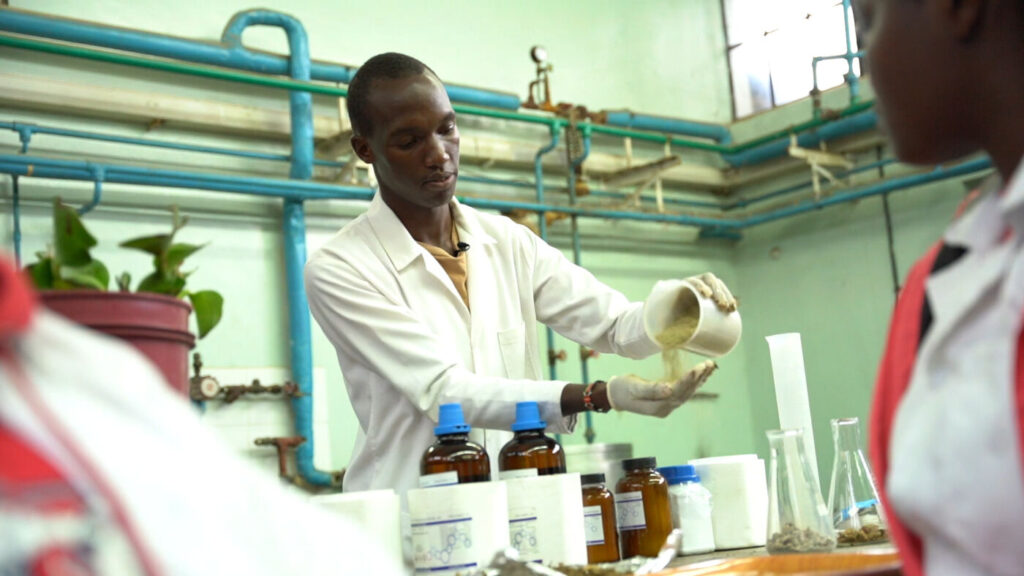
Futuremakers — a movement championed by ONE — spotlights African-led innovation that is shaping a more sustainable future, and by answering one simple but powerful question, Joseph set himself on the path to becoming one.
He asked himself, what if a problem choking one ecosystem could help solve another?
His answer to this question was Hyapak — an innovative enterprise that converts water hyacinth into biodegradable products like seedling bags. Instead of allowing the invasive plant to suffocate Lake Naivasha, Hyapak harvests it and converts it to biodegradable seedling bags that farmers can use instead of plastics.
For farmers, this innovation offers a practical and sustainable solution. Traditional plastic seedling bags are widely used in agriculture but often end up as waste after planting, contributing to pollution in fields and waterways. Hyapak’s biodegradable bags break down naturally in the soil, reducing waste while supporting healthier farming practices
This solution connects restoration with production, and it is already delivering results.
Hyapak has helped restore 20 hectares of Lake Naivasha, produced 30,000 seedlings, and created 45 green jobs. By removing water hyacinth from the lake, the company is helping improve water flow and ecosystem health while also creating economic opportunities.
What began as a frustrating afternoon on a stalled boat has grown into an enterprise that strengthens ecosystems, supports livelihoods, and proves that local innovation can drive systemic change.
This is solid proof that Africa is creating sustainable solutions that the world needs, and it is so amazing to see a Futuremaker like Joseph championing this cause!
Follow ONE on Instagram for more Futuremaker stories — and discover the bold African innovators building the sustainable, thriving future we all deserve.
Inspired?
Get to know more of our amazing Futuremakers.