We grew up hearing one phrase over and over again: ‘Cameroon is Africa in miniature.’
It was meant as a reflection of our country’s extraordinary diversity, natural wealth, and cultural richness. As children, we understood this through what we saw around us: fertile lands where farmers worked from sunrise to sunset, markets overflowing with cocoa, plantains, coffee, maize, cassava, and fruits. A country with forests, minerals, oil, rivers, mountains, and extraordinary cultural diversity.
Its cultural richness lives in over 250 ethnic communities, in the languages, music, food, and traditions that make Cameroon feel like an entire continent in one country. A place where innovation did not need imported language to exist because ordinary people solved extraordinary problems every day.
Cameroon is not short of talent. We produce brilliant doctors, engineers, entrepreneurs, artists, researchers, and community leaders. Cameroonians adapt, build, and lead. It is part of who we are.
Yet growing older meant confronting a painful contradiction.
How can a country so rich produce so much hardship? How can young people with ideas, education, and ambition still find themselves trapped in uncertainty?
This, too, is the Cameroon we know.
A Cameroon where access to quality healthcare often depends on what you can afford. Where education remains a privilege rather than a guarantee for many. Where talented young people graduate into unemployment, not because they lack ability, but because opportunities are scarce. Where many voices stay silent because speaking openly can come at a cost.
For those of us from communities affected by the ongoing conflicts in the North-West and South-West regions, these realities are even sharper. We have seen how conflict does not just destroy buildings; it disrupts futures. Schools shut down. Health centres stop functioning. Businesses collapse. Families are displaced.
Young people become disconnected from hope, and when hope disappears, migration, crime, and desperation often follow.
What many people get wrong about Cameroon is that they either romanticize it as a naturally gifted country that should somehow fix itself, or reduce it to headlines about conflict, instability, and humanitarian suffering.
Both narratives miss the truth.
Cameroon is neither a tragedy nor a charity case. It is a country full of untapped potential being constrained by governance failures, unequal global partnerships, shrinking civic space, climate pressures, and underinvestment in the very generation capable of transforming it.
What Europe often misses is that Cameroon’s youth are not waiting passively for solutions. We are already creating them.
Young entrepreneurs are building businesses despite unreliable infrastructure. Community leaders are sustaining education in difficult contexts. Farmers are adapting to changing climate conditions with limited support. Civil society actors continue defending rights and promoting accountability, often under immense pressure.
The problem is not a lack of ideas.
The problem is that too many international partners still treat African countries as places to manage, rather than partners to build with.
If Europe is serious about a future-oriented partnership with Cameroon, it must move beyond symbolic engagement and invest in genuine, accountable partnerships that put young people, local innovation, and democratic participation at the centre.
Not extractive relationships. Not conversations about Africa without Africans. Not policies shaped by assumptions that Europe knows best.
A fair partnership means investing in education that prepares young people for actual economic opportunities. Supporting entrepreneurship and local industries that create jobs at home. Strengthening climate adaptation support for farming communities already paying the price of a crisis they did little to create. Defending civic space so young leaders, journalists, and activists can contribute without fear.
Because the future of Cameroon will not be built through pity. It will be built through partnership, trust, and respect.
Yes, Cameroon is Africa in miniature but that mean more than geography or diversity alone. It reminds us that within Cameroon lives the same complexity, resilience, promise, and ambition that define the continent itself.
The question is no longer whether Cameroon has potential. It is whether the world is finally willing to take that potential seriously.
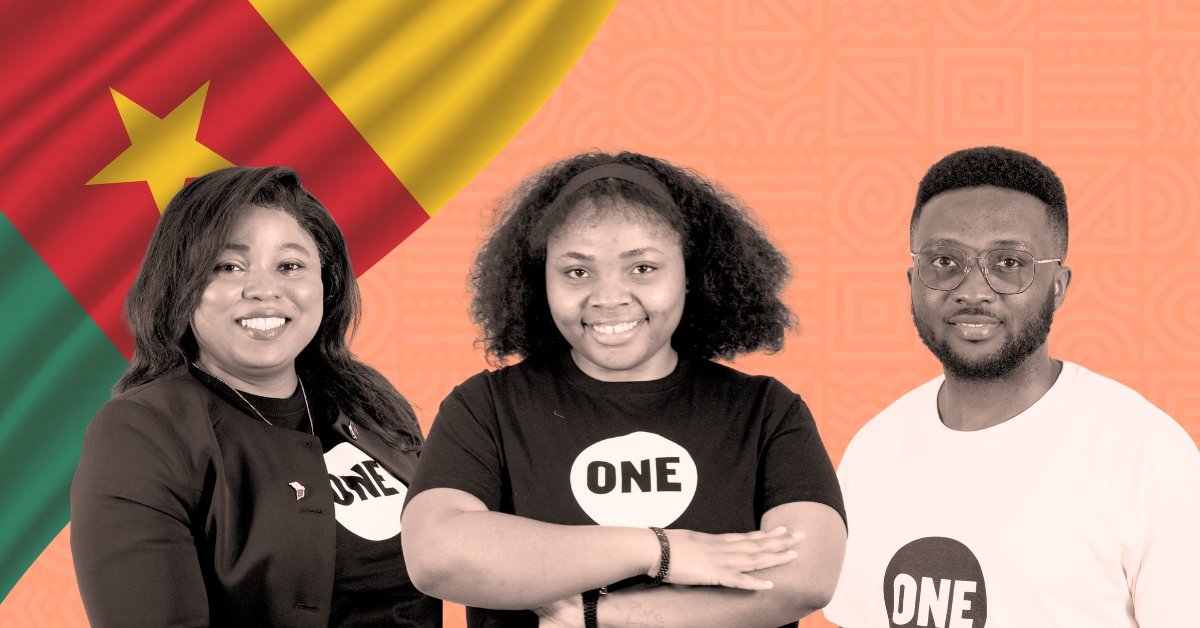
Clakson is a ONE Youth Ambassador, human rights defender and development worker from Cameroon. He is currently pursuing a Master’s degree in Conflict and Development Studies at Ghent University and is passionate about inclusive governance, gender in policymaking, policy reform, and sustainable peace.
Rose is a ONE Youth Ambassador and PhD researcher in International Relations from Cameroon. She is currently pursuing a Master’s degree in Conflict and Development Studies at Ghent University. She is the Founder and Executive Director of the Association for Child Protection and Women’s Empowerment and committed to advancing child protection and women’s rights, driving social impact, influencing policy, and empowering vulnerable communities. She is passionate about human rights, diplomacy, and international affairs.
Ashley is a ONE Youth Ambassador from Cameroon. She is currently pursuing a Master’s degree in Conflict and Development Studies at Ghent University. With a background in International Relations, she has experience and a strong passion for diplomacy, peacebuilding, human rights, youth participation, and equitable trade relations at the international level.