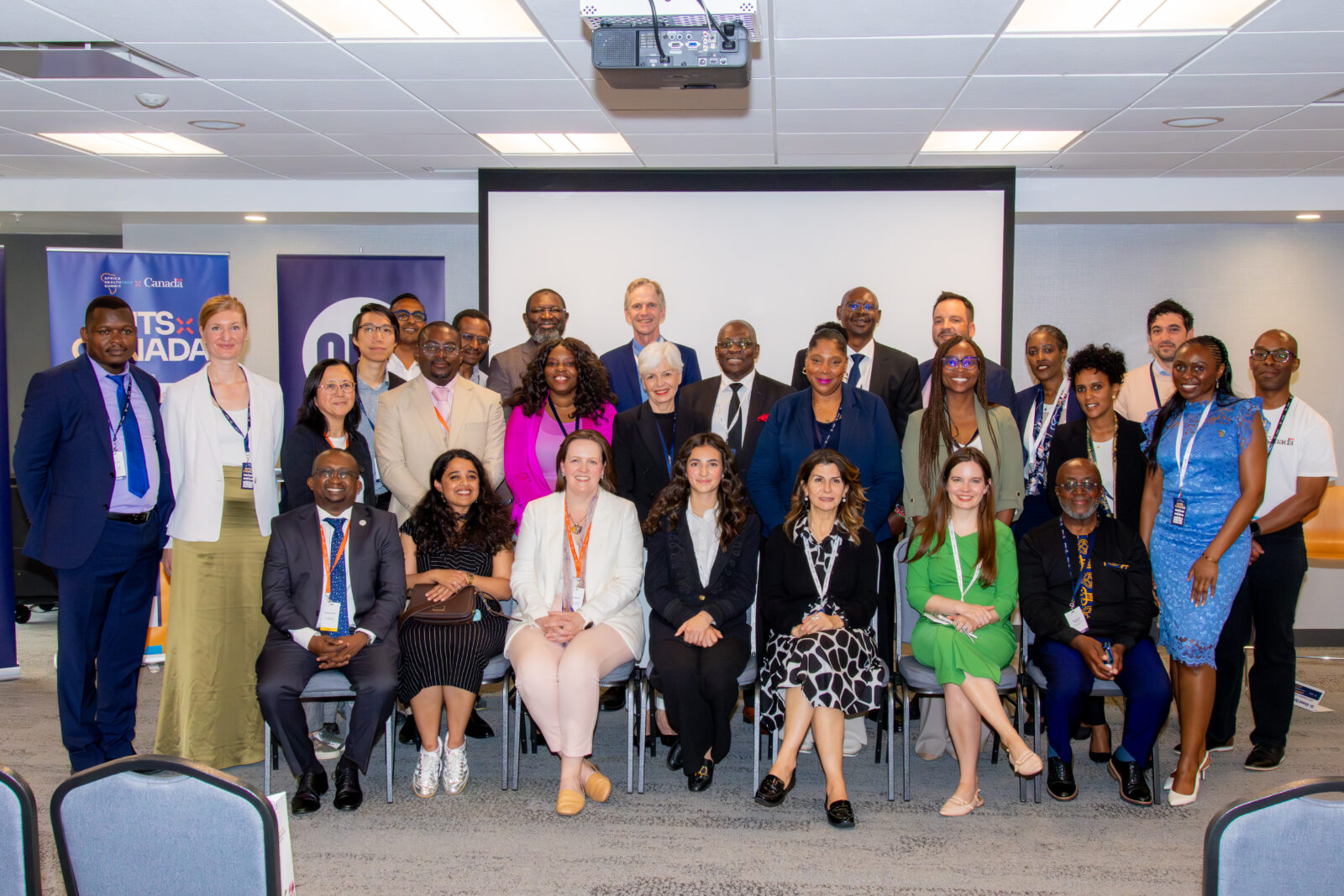
ONE’s policy panel at the Africa HealthTech Summit made the case for a new model of Canada-Africa health partnership built on investment, not aid.
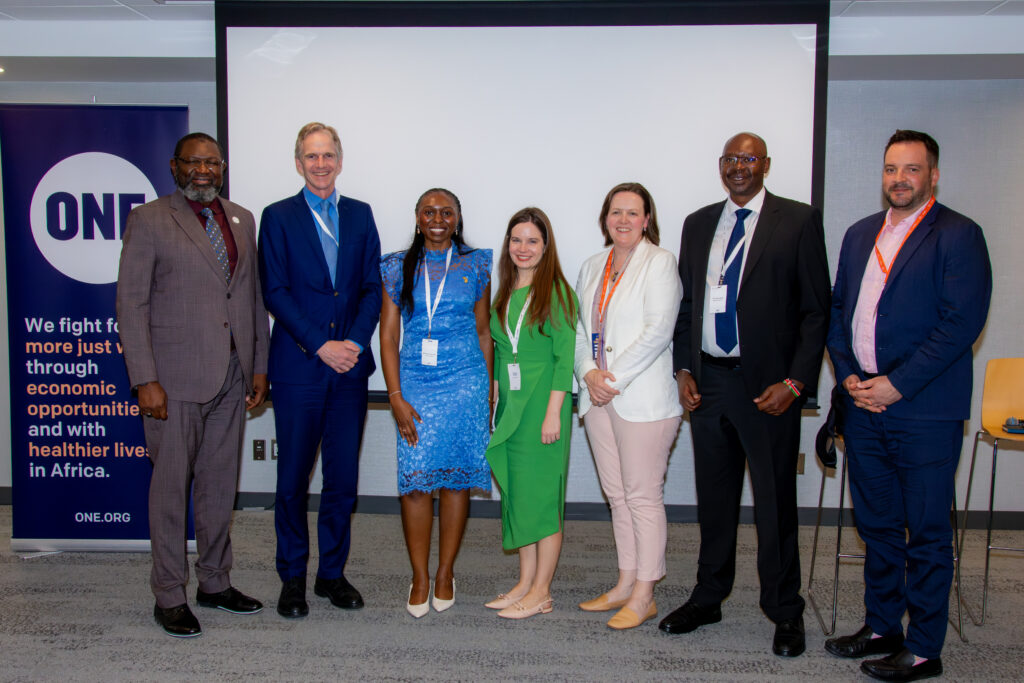
At the Africa HealthTech Summit x Canada in Toronto on June 10, ONE brought together voices from the Canadian government, African health systems, civil society and the private sector to answer a simple question: what would it actually look like for Canada to treat African health as a strategic investment rather than only a development footnote?
For too long Africa has been a low foreign policy priority for the Canadian government. Canada has a window to lead differently right now. Not as an aid donor, but as a genuine investment and innovation partner in Africa’s self-determined health agenda.
Why Canada’s role in global health innovation matters more than ever
Global health financing is in crisis. Official development assistance (ODA) fell 23.1 percent in 2025, the largest annual decline ever recorded. Funding for the Global Fund to Fight AIDS, Tuberculosis and Malaria is significantly below what is needed. Progress on maternal and child health has stalled. And an active Ebola outbreak is reminding policymakers in real time that infectious diseases do not respect national borders.
What the panel revealed about Canada-Africa health investment
Elizabeth Hoffman, ONE’s Executive Director for North America, set the tone for the day:
So often in the West we think: what can we do for Africa? To meet this moment, we need to start asking what Africa can do for us. There is incredible innovation coming out of Africa in the health tech space because the systems there are not bound by the legacies and dysfunctions embedded in our own.”
The business case for Canada
Dr. Erick Rutto, President of the Kenya National Chamber of Commerce and Industry, laid out the business case plainly. The health financing gap in Africa stands at approximately USD $66 billion and healthcare turnover across the continent is $270 billion. Seventy to 90 percent of healthcare and pharmaceutical products used across Africa’s 54 countries are not manufactured there. The opportunity for mutually beneficial partnership is not theoretical.
His prescription was direct: start with human resource development and pharmaceutical manufacturing to build the foundation before deploying digital technology. Dr. Rutto also raised a deadline Canada can’t afford to ignore. The African Continental Free Trade Area is building rules of origin for health technology products that will shape the trade landscape by 2033. Canada must be involved in the conversation now or risk being left behind.
The role of the Canadian government
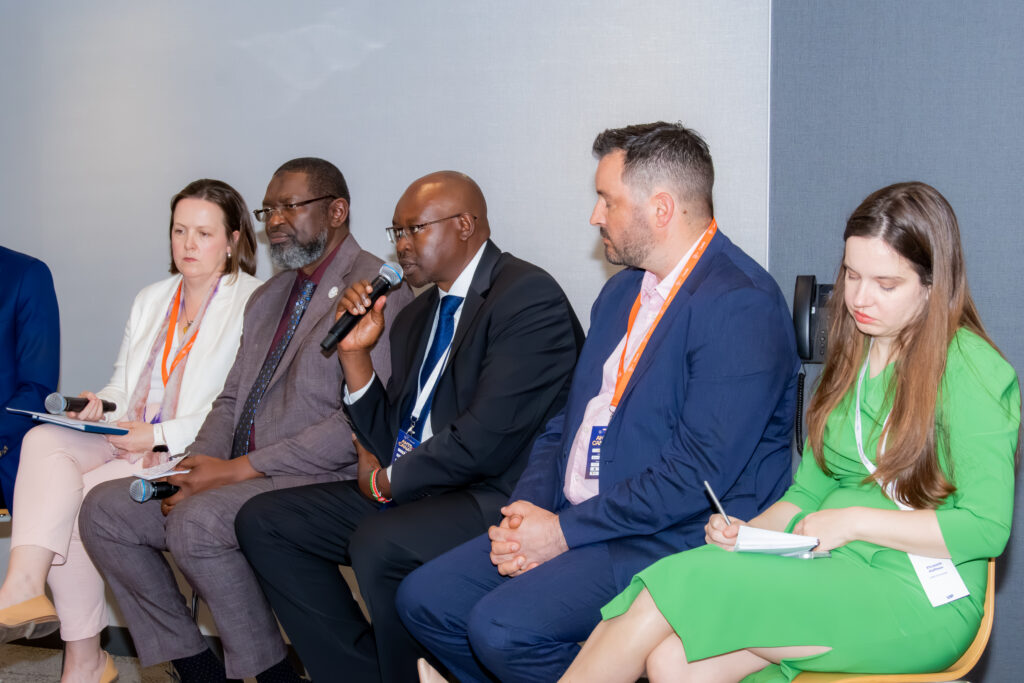
Andrew Smith, Director General of the Pan-African Affairs Bureau at Global Affairs Canada, was candid about the pace of government and stressed not to expect anything immediate. But he pointed to real mechanisms already in motion: new financing facilities through FinDev Canada, active engagement with the African Development Bank, and the African Finance Corporation. His argument for Canada’s most near-term role was not about writing checks or an overnight solution. Instead, he believes it’s less about direct funding and more about helping build the systems that make sustained private investment possible, and showing up to Africa partners as one coordinated offer rather than a fragmented one.
African health innovations
Dr. Ahmed Ogwell Ouma, CEO and President of VillageReach and former Deputy Director-General of Africa CDC identified rapid diagnostics as the single most accessible entry point. Africa conducts between 107 and 110 million HIV rapid tests annually. None are manufactured on the continent. The technology is not complicated, but what it requires is a partner willing to invest for 10-15 years and interested in building local capacity.
On the larger financing crisis, he pushed back on the easy narrative that the collapse of global health funding was not due to any one political moment. The real problem was years of complacency, external dependency, and a failure to build the trade-based relationships that would have made the health system resilient enough to survive one.
Where partnership fits in
Caitlin Goggin, CEO of CanWaCH, offered a reality check on how Canada thinks about its role in this conversation. Canada recently lost its measles elimination system and parts of health care system are still genuinely run on fax machines. Many African countries have forged ahead on health technology in ways Canada has not.
She was equally direct on the Ebola outbreak: weak surveillance and depleted health systems are not someone else’s problem to solve. The lesson is not that Canada needs to respond faster to crises; it is that investing in health systems before a crisis is not charity, it is shared security.
Building the pipeline of African health innovators
Dave Fenton, Chair of the Health Entrepreneurship and Innovation Pillar at the University of Toronto Africa Health Collaborative, zoomed out to the people behind the innovation. The survival rate for health entrepreneurs is stark: 50% entrepreneurs stop within the first year, and only 1 percent of those who make it are generating meaningful revenue after five years.
What Canadian universities can do differently is straightforward, he argued. They should invest in financial literacy, build mentorship networks, design programs around local economies rather than Western assumptions, and commit to measuring success over ten years rather than two.
Now what?
The Q&A surfaced something equally important: the proof of concept was already in the room. A physician based in Vancouver shared that his company was already manufacturing rapid diagnostic test kits in Tanzania and Kenya, with expansion underway. The exact intervention that Dr. Ogwell had called for earlier in the conversation was not theoretical at all.
A representative from UNICEF pushed on a harder question: how do you shift from aid to trade without losing the common purpose that built something like the Global Fund? Dr. Rutto pointed to decades of North American trade integration as a model: shared production, shared prosperity, genuine interdependence built over decades of integration. Toronto and Nairobi are just one day’s travel apart. The relationship between the two economies does not yet reflect that proximity and it should.
The session ended with contacts exchanged, meetings scheduled, and momentum that felt authentic. That is exactly why ONE was in the room. Africa is producing health innovation at scale, and Canada has the relationships, the financing tools and the political mandate to help build it. What’s been missing is the decision to treat as a strategic priority. The Canada-Africa strategy is supposed to represent that decision, and now it must.
ONE and the Africa HealthTech Summit are jointly producing a policy paper this fall. The conversation that began in Toronto didn’t end in the room.
Canada can lead on global health investment. Not with aid, but as a partner. The question is whether it will choose to.