|
Now imagine if the power went out… No power would make it a tricky to read this wouldn’t it? No power means: no computer, no power to charge your mobile phone, no email, no working fridge, no electric kettle, no evening light… Now imagine the power went out everywhere… homes, offices, street lights, factories, train stations, banks and ATM machines… even hospitals… for 6 months! How are you going to live? How will you store and cook your food? What happens if you get ill? Would you still be able to do your job? How could you earn a living and provide for your family in this world without power? Luckily this is not something that many of us in rich countries need to worry about. But having access to energy is central to almost everything we do. Energy literally powers our lives. However not everyone has access to the energy services you or I might take for granted. Did you know that in 2012 nearly 7 in 10 people living in sub-Saharan Africa do not have access to electricity or modern energy sources? That the majority of people in sub-Saharan Africa have to heat their homes and cook on open fires? Due to a lack of access to clean, safe, affordable and reliable energy these people have no decent evening light, limited access to modern communications and inadequate education and health facilities. This energy poverty in sub-Saharan Africa is limiting poverty reduction, job creation and economic growth. A lack of access to energy stifles people’s potential and their ability to earn a living. It’s a problem that ONE feels passionately about solving. But we need your help to do that… In fact Michael Elliot, ONE’s CEO, is challenging you to help us. At the Fortune Green Brainstorm event in California last month Michael delivered a speech to some of the US’s best technical minds explaining the problem and setting out the challenge.
So now the challenge is open to you! In the International Year of Sustainable Energy for All, and with governments, civil society and the private sector planning to make commitments towards UN Secretary General Ban Ki-Moon’s Sustainable Energy for All Initiative to mobilize global action to achieve universal energy access at Rio+20, ONE asks you:
After placing your vote don’t forget that these aren’t the only ideas. Feel free to use the comments page below to make further suggestions and follow the conversation on Twitter via the #MyEnergyIdea and #energy4all hashtags. We need your help to tackle the energy poverty challenge and to help governments provide energy access to the billions of people who do not yet have it. |
|
This piece is part of a series of blogs by leading NGOs to call attention to a range of issues that should be raised at the G8 summit at Camp David in rural Maryland from May 18 to 19. This was originally published on Huffington Post Impact. If you took the current population of the United States and quadrupled it, you would almost have the number of people living in extreme poverty in the world today. A whopping 20 percent of the world’s population — 1.4 billion people — lives on less than $1.25 a day. Over two-thirds of these extremely poor people do not have enough food to eat, and going to bed hungry is an everyday occurrence.
Food security, hunger and poverty are some of the most overwhelming problems facing the world today. It is undeniable that the vicious cycle of hunger and poverty will not be easily broken, especially since it has been exacerbated in recent years due to external shocks like the global food and economic crisis. Countless parents are unable to feed their families enough nutritious food, leaving children hungry and malnourished. Over a billion people will go to sleep hungry tonight. But don’t despair. Despite these hurdles, we can break this cycle for good, and the G8 must take the necessary steps to put an end to food insecurity once and for all. As the G8 countries prepare to convene at Camp David, agriculture in the developing world is expected to be a big focus. ONE and our 3 million members worldwide are jumping on this opportunity to ask the G8 leaders to remember their L’Aquila commitments and to invest in 30 country-owned plans that can ensure that 50 million people escape poverty through agriculture and 15 million children no longer suffer from chronic malnutrition. At the 2009 L’Aquila G8 Summit, the G8 countries and five other donors responded to the global food crisis and pledged $22 billion in support of agriculture and food security initiatives. The donors promised to deliver the funds within three years, to agree on a set of principles as to how they would spend the money, and remain transparent and accountable on their commitment. Despite the initial enthusiasm and diligence, however, the major donors failed to agree to consistent pledge years or a uniform system for measuring progress for the L’Aquila Food Security Initiative (AFSI). As of July 2011, donors had disbursed a mere 22 percent of their $22 billion pledges, and in most cases, donors had not taken the Rome Principles to heart. Only 7 of the 40+ L’Aquila Initiative signatories have made pledges to the Global Agriculture and Food Security Program, GAFSP, the multilateral fund that best embodies the Rome Principles. Just as important as the dollars and cents of the donor’s pledges is how the donors promised to spend those funds, as significant budget constraints in many countries make maximizing the impact of every aid dollar absolutely essential. The Rome Principles call on all donors to design development plans based on the needs of each developing country and to guarantee that all actors are cooperating to achieve sustainable outcomes. The Rome Principle of country ownership calls for investing in country-owned plans, aimed at channeling resources to well-designed and results-based programs and partnerships. Country ownership is of particular importance to us now, and the United States has started to take country ownership seriously as part of its Feed the Future initiative. Unfortunately, most other donors lag behind in developing investment plans that are country-led. With this lapse in mind, ONE has launched Thrive — an ambitious new campaign that calls on each of us to play our part in tackling the root causes of hunger and extreme poverty. You can learn more about the campaign and find out how to get involved at www.one.org. Our recent research has shown that if donors, national governments, and the private sector funded the country agriculture plans of the 30 poor countries that have taken the time to determine what their farmers need to thrive, we could lift 50 million people out of poverty with those 30 plans alone. If we complemented those agriculture plans with nutrition interventions in countries that have demonstrated commitment to nutrition, 15 million fewer young children will suffer from stunting or irreversible developmental damage to their minds, organs and bodies As food prices rise yet again, the barriers to achieving food security and poverty reduction remain more daunting than ever. Supporting country-led initiatives is one of the most proven ways to achieve sustainable development and progress against food insecurity, and I encourage the G8 leaders to remember this as they head to Camp David later this month. Read more G8 news and blogs on HuffPost’s G8 big news page. |
|
We have been hard at work with some tech wizards to create the ONE Street Tweeter – a clever robot that can print short tweets, tweetetes if you will, (40 characters or less) on road surfaces. Yes – we want to take your messages on the road. Better still, if we print your message we’ll even send a pic of it back to you to share it with your friends. So, what are you waiting for? You guys are more creative than any of those Mad Men types. Just tweet a message in your own words (no more than 40 characters including spaces) to encourage, rouse, and hustle the G8 to act now on hunger and poverty. Tweet your message to @ONEStreetTweet or if you don’t do that sort of thing then you can type your message into the box below.
Let’s hit the road and get heard. |
|
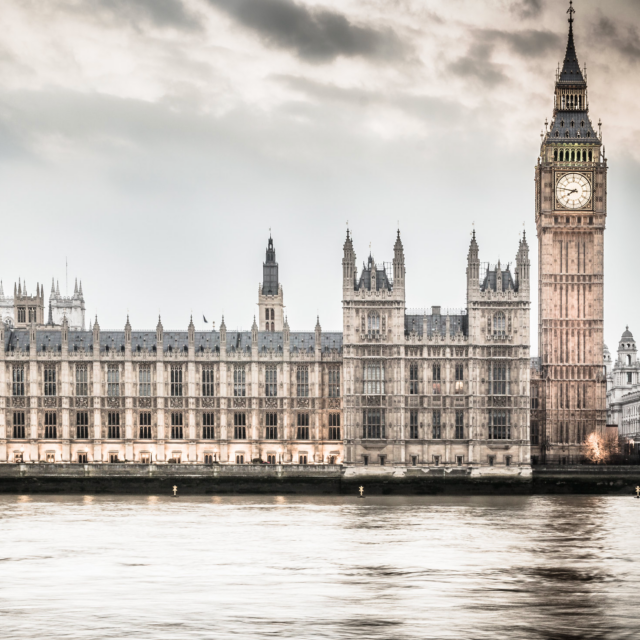
Yesterday morning in the UK, the Queen’s Speech took place amidst the occasion’s usual pomp. During a lavish ceremony at the Houses of Parliament there were guards, Lords, Earls, maces, Strangers, Black Rod and a whole host of other terms that we rarely hear, some we only just about understand but all are an essential part of the tradition and workings of the “mother of parliaments”.
Image: Parliamentary copyright/ Parliamentary Recording Unit The Speech, which marks the State Opening of Parliament, takes place in May each year and it is the government’s opportunity to set out what legislation it intends to pass in the coming twelve months. Now, whilst the government does not have to include everything it will do in the next twelve months in the speech, if something does make it into the speech it can be taken as a definite notice of intent that that is what the government is going to do. That is why we were hoping that the speech this year would include a promise to legislate on the 0.7% target for international aid. It did not. That isn’t to say that we aren’t pleased with what was there. Whilst the government did not promise legislation they did reaffirm their commitment to meet the target by 2013 in the speech which is good news. Meeting Britain’s aid promise will put 15.9 million children in school and help over 9 million people overcome malnutrition in the next four years. However, it does feel like the government have missed an open goal here. The legislation is ready, it is not a long bill and it was in the manifestos of all three main political parties before the last general election and the coalition agreement. Why wait? There are plenty of people around the world who are probably wondering the same thing. ONE’s report “Small Change/Big Difference” shows the fantastic results that could be achieved if the government keeps its promise to the world’s poorest: better nutrition for 9.6 million people, safe drinking water for 17 million people, 5.8 million safe births saving the lives of 50,000 mothers, the list goes on… The UK has long been a world leader in international development and this would be its opportunity to do so again. If the UK legislates for and meets the 0.7 target it would the first G8 country to do so; a record the government and the British public can be proud of when the Prime Minister welcomes other world leaders to the UK for the G8 in 2013. |
|
On March 12th, ONE France launched one of its most ambitious campaigns yet: ONE VOTE 2012. The idea was to take advantage of the presidential election to call to the candidates to revise the current relationship between France and Africa. The campaign covered everything from aid and its efficiency to the duty of transparency of French companies working in Africa. During almost two months, ONE members quizzed the candidates using twitter on the following areas:
ONE France launched a ONE Vote 2012 website featuring a video that starred former presidents of the Republic. When candidates responded to the questions, ONE members could vote on whether they liked or disliked their answers.
The campaign was a great success. All the candidates answered our questions, with the exception of extreme right leader Marine le Pen. We even received an answer in video to our questions (see the answer of Kader Arif, from elect President François Hollande’s team). Last Sunday, the presidential election ended, and François Hollande was elected President of French Republic. It is thus to him that goes the heavy but necessary duty to revise the link uniting France and the African continent for the coming five years. Within the framework of the ONE VOTE campaign, François Hollande made a commitment towards making the 0.7 % Aid promise. He also declared support for more transparency in the extractive industries in their operations abroad. We hope that the new president will keep to his commitments: he can be inspired by a recent poll that demonstrates that an ambitious development policy is supported by the French people: only 19 % of our fellow countrymen want the French aid for development to be decreased. According to another survey published last month, 74 % of the French people are in favour of a financial transaction tax, which would raise money for development. François Hollande has in his hands the power to raise the French international politics as high as France’s ambitions. And the countries of Africa should be his first strategic allies in this adventure. The new president has the chance to make make the relationship between France and Africa a powerful remedy for the challenges ahead and to open the way to a better future for all. A first opportunity will appear to the new president on May 18th, during the G8 summit. The summit will discuss an initiative to reduce global poverty and hunger. ONE will keep up the fight for a new relation between France and Africa. Thank you all, our members, our Facebook fans and Twitter followers, who signed and shared the petition, who mobilized and made these commitments possible. And please, keep mobilized: let us not give up and let us call on the leaders of the G8, of whom François Hollande is henceforth a member, to break the vicious circle of hunger and poverty by signing the petition! |
|
The UN has announced that Prime Minister David Cameron, President of Liberia Ellen Johnson Sirleaf and President of Indonesia Susilo Bambang Yudhoyono will co-chair a UN High Level Panel to advise the United Nations on global development beyond 2015 – the deadline for the Millennium Development Goals (MDGs) which were set in 2000 to significantly reduce global poverty and disease.
These leaders have an important job to do – they will need to help ensure that the existing MDGs are met as far as possible – a important job we must all stay focused on – and then set the agenda for what happens next.
Responding to the announcement, Michael Elliott, President and CEO of ONE, said: “We congratulate the three leaders who have been chosen to lead the High Level Panel, all of whom are well qualified for the task ahead. “We want to see the panel members adopt two important principles. First, to ensure that the Millennium Development Goals are met as far as possible by 2015. It would be a travesty to set out new goals before we have done everything possible to reach the ones now in place. Second, to guarantee that the voices of the poorest are heard and acted upon in deciding what comes next. The simplest way to find out what the world’s poor want and need is to ask them, and the panel’s first item of business should be to undertake a genuine process of wide-ranging consultation to that end. “Meanwhile, we should remember that we still have 1330 days to go before the end of 2015. During that time, governments and civil society must make a determined final push to halve global poverty and disease. Over the next three years, that will remain a primary focus of ONE and our 3 million supporters around the globe.” Adrian Lovett, Europe Executive Director of ONE, added: “This appointment is a recognition of David Cameron’s strong record on international development. He has demonstrated his commitment to the fight against extreme poverty and has backed his words with action. “The Prime Minister must now take on the responsibility of global leadership. He has the chance to help set the world on a credible path towards ending extreme poverty and hunger. But to succeed, he will need to make this is a top priority in his negotiations with other leaders, in his UN role and as chair of next year’s G8.” You can find out more about the MDGs here. |
|
Next Wednesday, a special debate with Herman Van Rompuy will be broadcast on the occasion of Europe Day. Click on this link to find out more about this event and ask EU President Van Rompuy to make sure that economic difficulties don’t stop Europe from leading the fight against extreme poverty. Ask whatever you like but here’s one idea: In June, European leaders will discuss the next 7-year EU budget. How will you make sure Europe’s promise to Africa is kept? EU aid has made a huge difference. Between 2004 and 2009 it has helped enroll more than 9 million children in primary education and vaccinate more than 5 million against measles. You can send your question to elisa.revert@euronews.net. If your question is selected, Euronews will contact you to participate in the recording of the show. You can also record a question by webcam or text on www.askthepresident.eu or via Twitter by using: #askHVR |
|
Do you want to help lead our grassroots campaigning? Are you a UK university student? We’re looking for 50 Student Leaders to organise local campaign groups and build our movement. We are looking for highly enthusiastic students from a range of universities with a strong commitment to fighting against extreme poverty and a passion for ONE. Simply sign up to ONE Students today and complete the Student Leader Form We have extended the deadline until 11am Wednesday 6th June. Our student activists use their energy and creativity to run inspiring campaigns at university to influence the decisions that affect the world’s poorest people
As a ONE Student Leader you will help show strength in numbers by promoting online actions. You will get your voice heard with letters and meetings with MPs. And you will raise awareness by holding events on campus and creating a buzz through social media. You’ll work together in small groups at your university and build support among other students. We’ll assist you with support and guidance from experienced ONE staff, special access to ONE materials and merchandise and unique opportunities to be part of important campaign events (such as handing in a petition to the Prime Minister in Number 10!). If you are selected as a Student Leader you will be invited to our Student Activist Weekend on Saturday 16th - Monday 18th June, where you will:
All UK university students are invited to join ONE Students today!
|
|
Last week, ONE Brussels held a “living proof” event for European institutions’ interns. Alexander Woollcombe, ONE Brussels Director, shared with them the real story of the incredible progress being achieved in development. He told them the stories that are too often ignored – the individuals transforming their communities and countries, and the smart aid investments that are helping them realize their goals.
In these times of economic uncertainty, EU interns were encouraged to spread the word that development assistance works and to help NGOs protect governments’ aid budgets against any cuts. The presentation was followed by numerous and enthusiastic questions asked by participants. Finally, to bring this memorable evening to a close on a high note, everyone had a well-deserved Belgian beer in a typical Belgian brasserie. All these development enthusiasts will meet again soon. This event was the first in a whole series of gatherings organised by ONE for young people. If you would like to be one of them, please drop us a line at brusselsoffice@one.org and we will get back to you. You can also follow updates from our Brussels team by following @ONEBrussels on twitter. |
|
The following is a blog from Michael Sheldrick ONE member and Policy Manager, Global Poverty Project. I have great news, but some alarming news too. Smart aid from Australia is saving and transforming lives. We’ve reduced malaria rates in the Solomon Islands by more than half, enabled thousands of girls to go to school, saved countless lives and lifted millions of people out of extreme poverty. But right now this amazing progress is under threat as our Government is considering breaking its promise to the world’s poorest people. The Government is looking for ways to bring the budget back into surplus next week, and reports suggest that smart aid is on the chopping block. The next few days are crucial. We’re asking ONE members in Australia to please send an urgent message to Wayne Swan to urge him not to cut aid. To build on remarkable progress smart aid has achieved, the Labor Party promised at the last two elections to double international aid to 0.5% of Gross National Income by 2015. Or to put another way for it to reach just 50 cents in every $100 of Australia’s national income. By keeping its promise to increase aid in this year’s budget, the Government will allow Australia to save the lives of an extra 500,000 people each year, vaccinate 7.7 million children against deadly diseases over the next 5 years, and help break the cycle of hunger and malnutrition in the world’s poorest communities. Please help ensure these vital goals are not derailed. The Treasurer is faced with some tough choices as the Government tries to bring the budget into surplus. But Australia can afford to keep its promises to the world’s poorest. Although we were ranked as the second wealthiest country in the world in a report last year, our commitments put us in the bottom half of the wealthy nations that give aid. Others have kept their aid promises despite facing tougher economic conditions. If enough Australian members email Wayne Swan in the next few days we can help ensure smart Australian aid continues to deliver amazing results, and that the budget isn’t balanced on the backs of the world’s poorest people. Together as ONE we can make a difference. |
The International ONE Blog is a daily log of the anti-poverty movement. The site is operated by ONE staff, with guest contributions from ONE volunteers, members and allies.
The content of each post and each comment represents the views of that author and does not necessarily reflect the views of ONE. ONE does not support or oppose any candidate for elected office, and any post expressing support or opposition for a candidate is not endorsed by ONE.
TAGS: Energy, ONE, United Nations